Ayutthaya: Discovering Thailand’s Ancient Capital
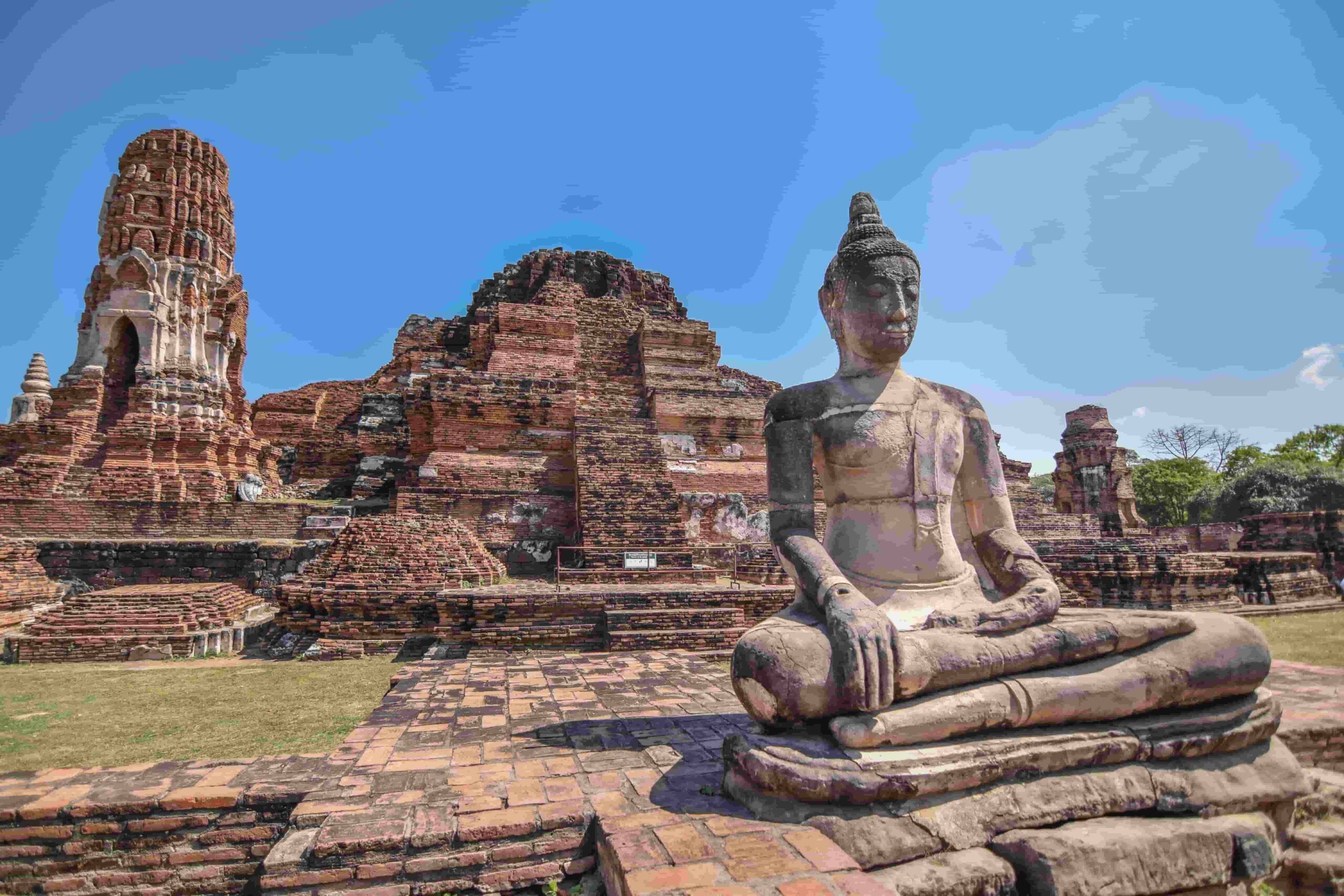
Honestly, the first thing I thought when we walked into the park was that it felt like an open-air museum. Red brick towers against a huge blue sky, stone Buddhas sitting quietly in the grass, and barely any noise. Ayutthaya is only about 80 km north of Bangkok, but after the traffic and neon of the city, it felt like a different country.
It’s wild to think about how important this place once was. For more than four centuries, it was the proud capital of the Kingdom of Siam, pulling in wealth as one of Southeast Asia’s top trading cities during the 1600s. Fast forward to today, and it’s a UNESCO-listed site packed with incredible ruins. The best part? You can actually pick out the distinct blend of Khmer and early Thai styles once you get the hang of it.
We went as a day trip from Bangkok. This post covers the temples we visited, how we got there, what things cost, and a few things we wish somebody had told us before we left.
A Quick Bit of History
Ayutthaya was founded in 1350 by King U Thong, on an island where three rivers meet: the Chao Phraya, the Pa Sak, and the Lopburi. That spot turned out to be perfect for trade. Merchants and diplomats from Europe, China, Japan, and Persia came here, and some of them wrote home about the gold-covered temples and palaces they saw.
It ended badly. In 1767, Burmese forces besieged the city and burned it. The wooden palaces were destroyed, the gold was stripped from the temples, and most people either fled or were taken away as captives.
What’s left now is brick and stone: crumbling towers, tall spires, and rows of Buddha statues without heads. It’s a sad history, but it’s also why the place feels so atmospheric.
The Temples We’d Recommend
There are dozens of ruins in the park, and you can’t do them all in a day. We visited just five temples, and these four are the ones I’d tell a friend not to skip.
Wat Phra Si Sanphet
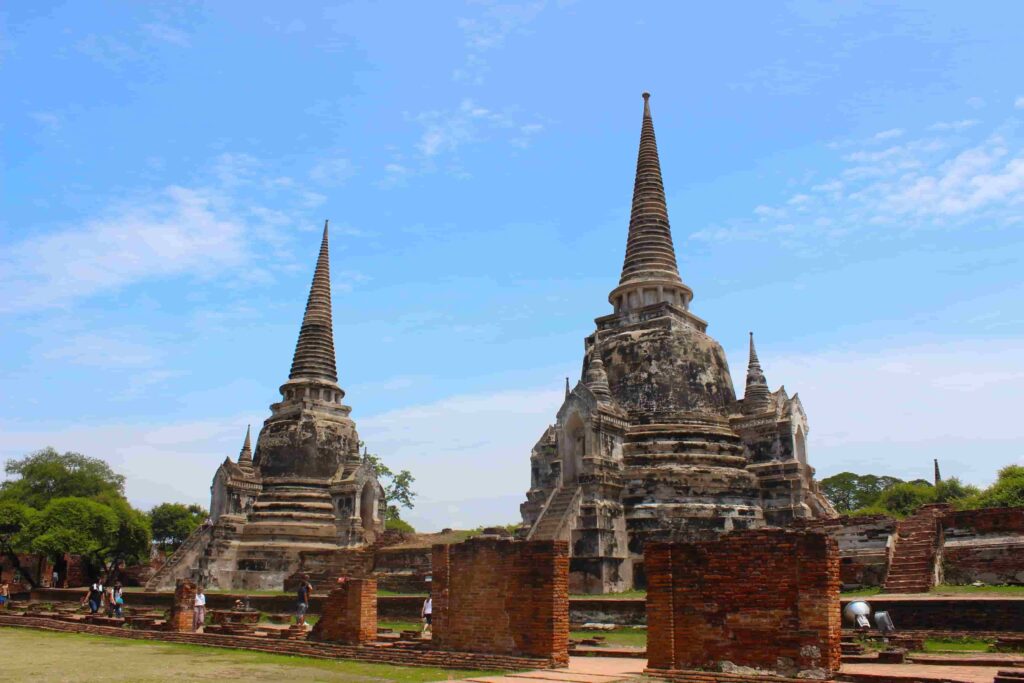
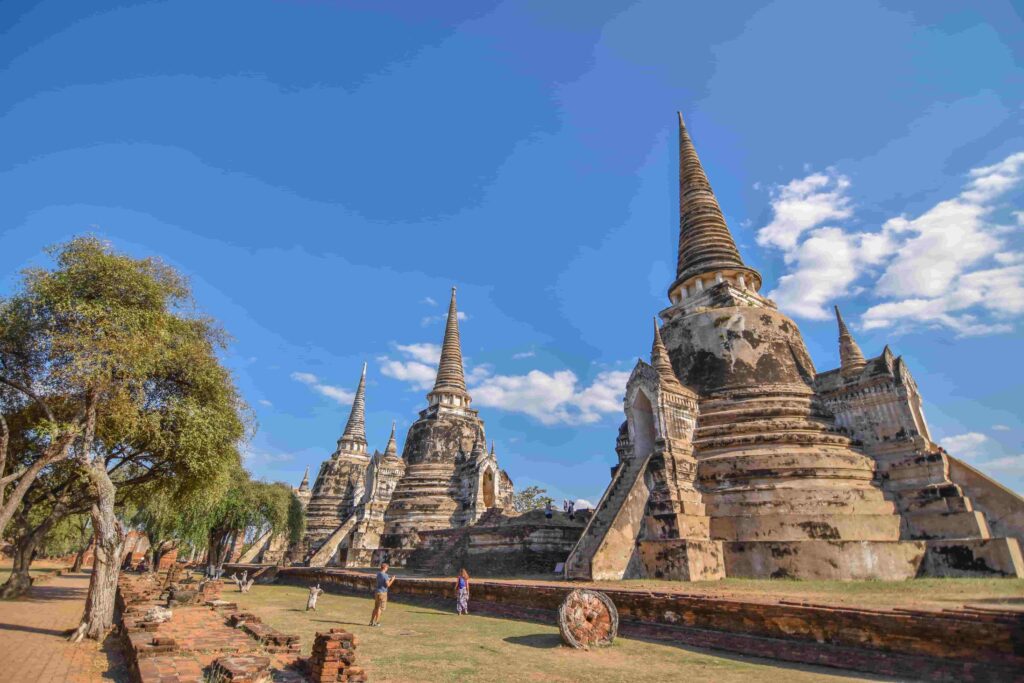
You’ll recognize this one straight away from its three bell-shaped chedis. It was the royal temple inside the old palace grounds, and the chedis hold the ashes of three Ayutthaya kings. We spent a good while just walking around on the lawns underneath them, trying to picture what the palace looked like when it was standing. The pale stone against the red brick also makes for some of the best photos in the park.
Wat Mahathat
This is where the famous Buddha head sits, wrapped in the roots of a banyan tree. After the 1767 attack the statue was left to the weather, and over the years the tree simply grew around the head. It’s smaller than people expect, but still worth seeing.
One thing to remember: crouch down when you take a photo, so your head isn’t higher than the Buddha’s. It’s a basic sign of respect in Thailand, and there are signs at the site reminding people.
Wat Ratchaburana
Located right across the street from Wat Mahathat, it pairs perfectly with a visit there. You’re allowed to climb the main prang; just watch your step on the steep brick stairs. The panoramic view over the park from up top is a major highlight. Down inside, you can check out a stairway leading to a former royal treasure crypt, complete with lingering traces of old wall paintings.
Wat Chaiwatthanaram
If I had to pick a favorite, it would be this one. It was built in 1630 by King Prasat Thong in honor of his mother, and it sits right by the river. A tall central prang is surrounded by smaller ones, which represent the mythical Mount Meru. We left it for the end of the day, and I’m glad we did. Around sunset the brick turns a warm orange and the light bounces off the water. If you only have energy for one temple in the late afternoon, make it this one.
Getting to Ayutthaya from Bangkok
There are three easy ways, depending on your budget and how much you want to plan.
By train. This is the cheapest option and the one we took. Trains leave from Krung Thep Aphiwat Central Terminal, and you can also catch one at Don Mueang Station. Third-class tickets are very cheap. The windows are open, so you get a nice breeze, and vendors walk up and down selling snacks. It takes about 1.5 to 2 hours.
By guided tour. If you don’t want to organize anything, a small-group day tour is the easy choice. Most include an air-conditioned minivan, an English-speaking guide, temple entry fees, and lunch.
By private taxi or Grab. You can book a driver for the day through an app like Grab, which means you pick the departure time and the order of the temples. Just agree on the price and waiting time before you leave.
Getting Around Once You’re There
The ruins are spread out, so you’ll need some way to move between them.
Bicycles are the most popular choice. You can rent one near the train station or the temple gates for roughly 50 to 100 THB a day, and the park is flat, so it’s an easy ride.
If you’re comfortable on a scooter, renting one lets you reach the temples further out. Tuk-tuks are another option, usually around 200 to 300 THB per hour. Agree on the price before you get in.
Things to Know Before You Go
When to go. November to February is the best time, since it’s cooler and drier. March to May gets very hot, and during the rainy season (June to October) the paths can get muddy.
Money. The park itself is free to enter, but individual temples charge foreign visitors, usually between 20 and 50 THB. The big ones like Wat Mahathat, Wat Ratchaburana, and Wat Chaiwatthanaram are 50 THB each. There’s also a combo pass for six major temples at 220 THB. Bring cash, because tickets are sold at small booths at each gate.
Opening hours. Most temples open around 8:00 to 8:30 am and close between 5:00 and 6:00 pm. Wat Chaiwatthanaram stays open a bit later, until about 6:30 pm. Going early means fewer people and softer light.
What to wear. Be sure to cover your shoulders and knees. Light cotton or linen trousers are ideal for the heat, and wear shoes that are easy to take off, as you’ll need to remove them when entering active shrines.
Sun and heat. Expect almost zero shade, meaning a hat, sunglasses, strong sunscreen, and a large bottle of water are essential.
Pace yourself. Plan to visit just four or five temples, and take a relaxing break for lunch by the river. Trying to see everything in one go is a quick way to get burnt out and frustrated.
Be respectful. by staying off fragile ruins, and remember never to pose with your head positioned higher than a Buddha statue.
A One-Day Plan That Works
This is roughly how I’d do it again:
- 7:30 to 8:00 am: Train from Bangkok to Ayutthaya
- 9:30 am: Rent bikes and start at Wat Phra Si Sanphet
- 10:30 am: Wat Mahathat and the Buddha head
- 12:00 pm: Lunch by the river
- 1:30 pm: Wat Ratchaburana
- 3:30 pm: Head to Wat Chaiwatthanaram
- 5:30 to 6:00 pm: Watch the sunset there
- Evening: Back to Bangkok by train, taxi, or Grab
What to Eat
The food is worth a proper stop, not just a quick snack.
The grilled river prawns are the famous one: big freshwater prawns cooked over charcoal and served with a spicy seafood sauce. The orange fat in the head is a local favorite. Boat noodles are another good choice, a strongly flavored noodle soup served in small bowls, so order a few. For something sweet, try roti sai mai, which is thin strands of colored sugar floss wrapped in soft roti or a pandan crêpe.
Questions People Often Ask
How long do you need in Ayutthaya?
One day is enough. You can visit All these temples in a single day.
Is it better to go by train or on a tour?
The train is cheaper and more of an experience. A tour is easier because transport, entry fees, and lunch are all sorted. If you like flexibility, take the train. If you’d rather not think about logistics, book a tour.
Do you have to pay to enter the park?
The park itself is totally free to enter! But individual temples charge foreign visitors around 20 to 50 THB, or you can just grab a six-temple combo pass for 220 THB.
What’s the best time of day to visit?
Visit early in the morning for fewer crowds, or go in the late afternoon to catch the best lighting.
What should I wear?
You’ll need to cover your shoulders and knees. It’s also best to wear shoes that are easy to take on and off.
Final Thoughts
Ayutthaya is more than a pile of old bricks. It shows just how powerful and international Siam once was. If you start early, wear comfortable shoes, and stick to four or five temples, you can see the best of it in one day from Bangkok.
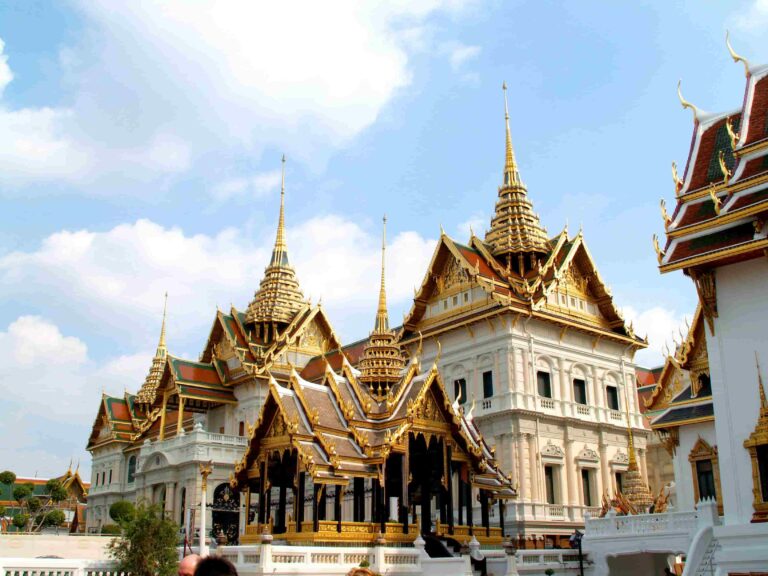
If you enjoyed this, have a look at our guide to the Grand Palace in Bangkok, where Thailand’s royal history carries on to this day.