So many people visit Thailand and either land directly in Bangkok or make their way to the beaches. And hey, Bangkok is awesome; the beaches are beautiful and nobody’s arguing with that.
But here’s the deal. It’s the people that find Chiang Mai that end up leaving the country with a kind of smug half-smile and say,
“Oh, you have to go up north” or who planned to visit for three days and end up staying for three weeks because they just couldn’t get themselves to leave.
That’s the effect Chiang Mai has on you. Every single time, reliably and completely.
Tucked in the mountains of Northern Thailand with jungle on all sides, and temple bells, and street food cooking at every corner of every street,
Chiang Mai is a city that feels like it is hiding in plain sight even though millions visit every year. It’s a little slower and a little more human than Bangkok,
a lot more peaceful and a little more beautiful. And once you spend even a few days in Chiang Mai you’ll completely get why people have been calling it the best city in all of Southeast Asia.
300 Temples. Yes, Three Hundred:
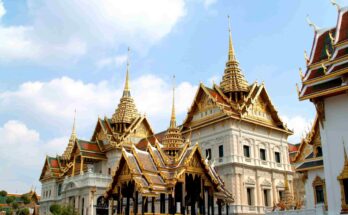
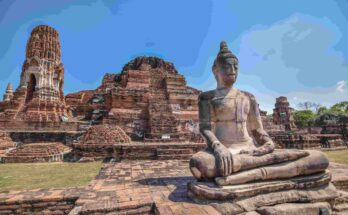
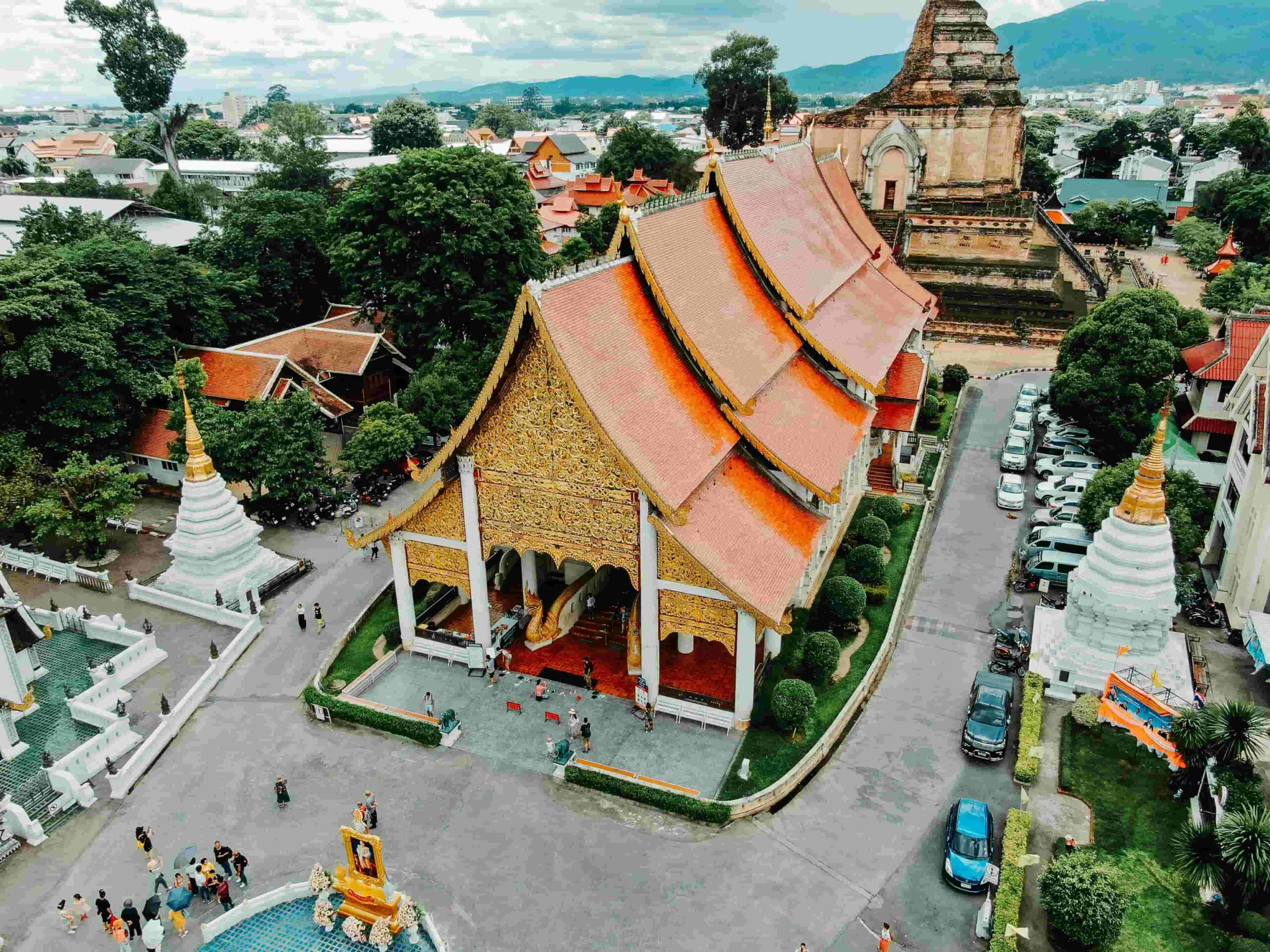
There are 300 temples in Chiang Mai. “Three hundred.” That is not a typo. Once the capital of the ancient Lanna Kingdom, the kings at the time really knew how to have their places of worship built well, and a consequence is that Chiang Mai is a city you really, truly cannot take five steps without running into a gilded stupa, a carved wooden entrance or a courtyard full of quiet, saffron-robed monks on their morning rounds.
You do not need to visit every 300 of them (although you can if you so wish!). But you should visit at least a few and the good news is even an afternoon in the Old City spent temple hopping will more than make you feel entirely and delightfully over-faced.
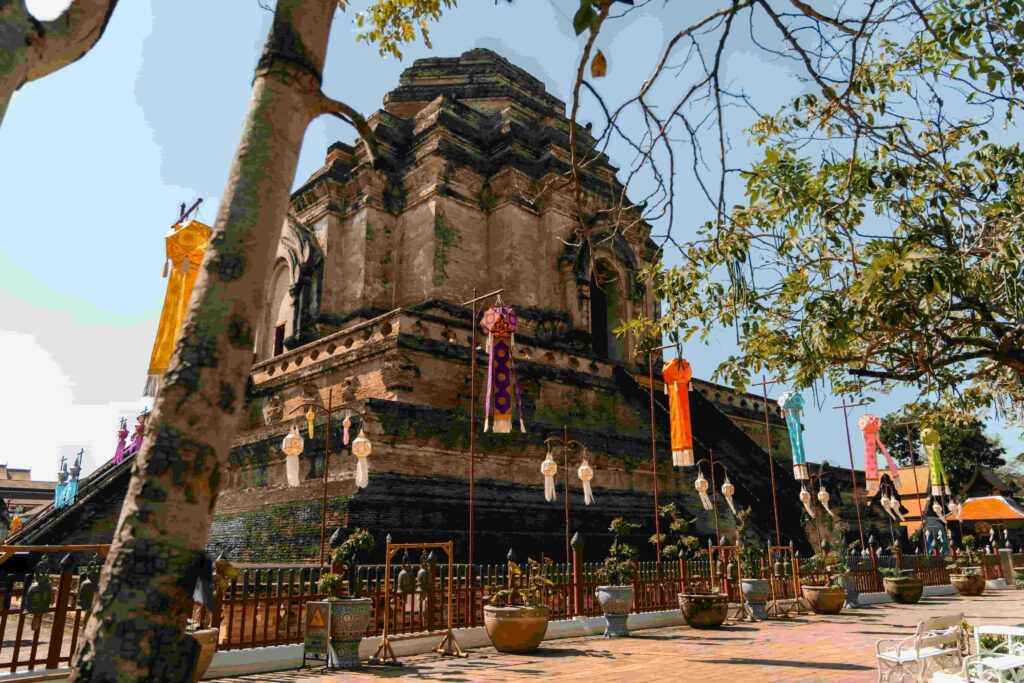
Wat Chedi Luang is the best choice for starting your temples tour.
This ancient temple stands in the middle of this Old City with colorful festival banners and hanging lanterns that dance in the breeze.
It is atmospheric, and utterly beautiful—particularly in the late afternoon when the sun melts into golden tones and all the surrounding architecture glows. Stand under it and gaze up. That is all we have to say.
"In Chiang Mai, you do not go looking for temples. They find you. Turn any corner and there one is, glowing quietly in the afternoon light."
Doi Suthep — The Temple on the Mountain:
The one thing which you can’t miss in your visit to Chiang Mai is Doi Suthep. It’s the golden temple on the mountain and the journey to the mountain goes between the green lush road through the jungle and a large snake statue leading to the entrance of the temple.
And the city disappears slowly as you climb high.
And then you see the chedi. The gold and white tile covered pagoda at the center of Doi Suthep catches the sun in a way that seems almost impossible;
you want to reach out and turn the saturation up on the whole building. On a bright day, you will be treated to a view of the entire city of Chiang Mai, stretched out in the valley below and the surrounding mountains disappearing into the distance on all sides; a vista which will leave you feeling incredibly small and overwhelmingly lucky.
Visit either in the early morning or late afternoon, both are ideal times; the light is at its best, the number of visitors is at its least, and it feels altogether more spiritual.
Take off easy-to-slip-on-and-off shoes, and be prepared to remove them as you would be surprised how many visitors will be fumbling about at the bottom of the staircase, creating a backlog as they do so.
Doi Suthep tip:
Hire a red songthaew from anywhere in the city. The iconic red pickup truck taxis used in Chiang Mai are incredibly cheap, great fun to travel in and you can be assured that you will know where to go.
You must wear a modest outfit at the temple, with covering of knees and shoulders, as it is a working place of worship. Loan sarongs are available at the temple should you require one.
The Night Markets — Your Wallet’s Greatest Enemy
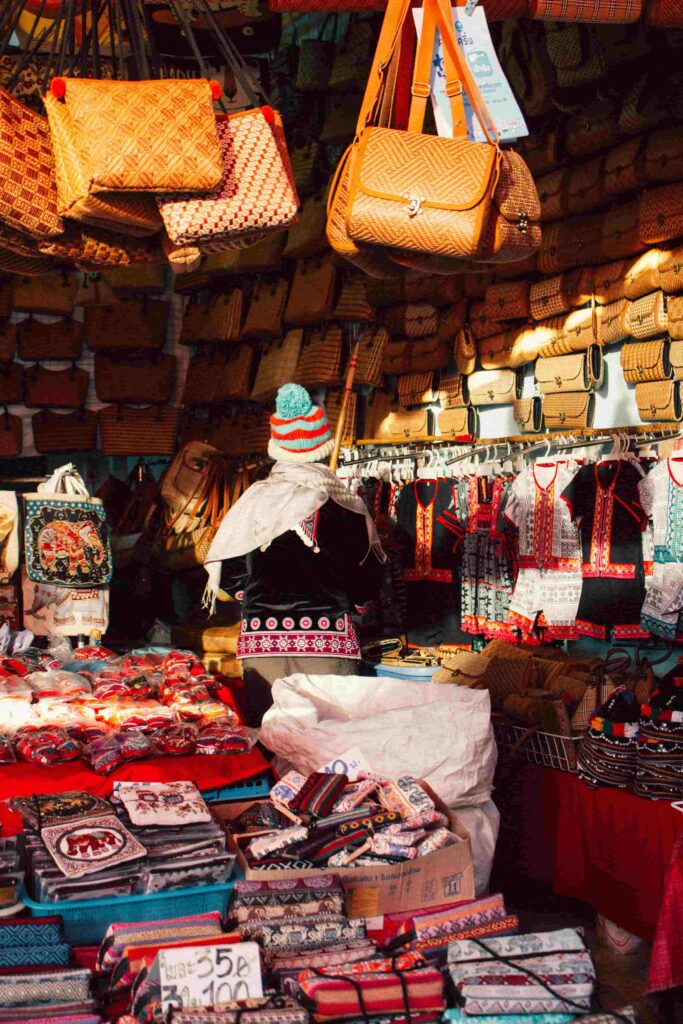
Right then. I want to talk about the markets. Because Chiang Mai’s markets are dangerous. Not dangerous in a scary way. Dangerous in the sense that you go in expecting to “just have a browse” and come out an hour later with three bags, two scarves, a hand-painted umbrella, a pair of elephant print trousers, a set of ceramic bowls and not a single iota of remorse.
The Sunday Walking Street on Rachadamnoen Road is the one that everyone mentions and it’s no wonder. The whole road is closed to traffic and packed with hundreds of stalls selling all sorts of hand-made crafts, traditional paintings and artworks, national costumes, woven bags, silver trinkets and any sort of street food the Thais ever invented. In the golden evening light from all the stalls and the wonderful aroma of BBQ meats and sweet mango sticky rice, accompanied by live music wafting from somewhere further down the road, it’s a truly magical evening activity — one of the most atmospheric you will find anywhere in Southeast Asia.
Walk slowly, bargain with kindness and eat everything. Those are the rules.
The Food — Oh, The Food:
This Northern Thai food is absolutely not what most people would assume Thai food is. Scratch the idea of green curry and pad thai here, in Chiang Mai the classic dish you absolutely must eat is Khao Soi — which is essentially a creamy rich coconut curry sauce poured over egg noodles, topped with crisp fried noodles, pickled mustard greens, chopped shallots and lime, served hot and spicy, this is unbelievably warming, deeply flavorful and utterly unlike anything you’ve tasted.
Find a small local eatery, order a bowl and be prepared to instantly order a second. Alongside this you can experience a truly sensational street food culture: Sai Oua, a Northern Thai herbal sausage cooked over an open charcoal grill; Larb, a hot minced meat salad flavored with toasted rice; market bought mango sticky rice for afters. Literally everywhere someone is grilling something unbelievably delicious and so cheap it costs less than a cup of coffee at home.
Food tip:
You absolutely have to find the best Khao Soi in Chiang Mai, but avoid the touristy places on the main road; seek out a family-run place in a small alley off the side roads of the Old City. Where there are locals is the only place to go. Always the place.
The Old City — Just Walk. Seriously, Just Walk.
The Old City is a compact, one-square-kilometer grid wrapped by an ancient moat you can walk around in about twenty minutes — and inside it, every lane hides something. Turn one corner and you’ll stumble on a temple courtyard; turn another and it’s a tiny art gallery, a family-run coffee shop, or a wall someone’s covered in a hand-painted mural.
Rent a bike if you want to cover more ground, or just walk and get lost on purpose — some of the best finds in the Old City happen when you throw away the map and follow whichever lane looks interesting. When your feet give out, there’s always a rooftop cafe nearby to sit, watch the street, and do nothing for a while.
Your Must-Do List in Chiang Mai
Do not leave Chiang Mai without doing these:
- Visit Doi Suthep temple — the golden chedi above the city is non-negotiable.
- Eat Khao Soi — find a local spot and eat at least two bowls.
- Walk the Sunday Night Market on Rachadamnoen Road — budget carefully.
- Spend a morning at Wat Chedi Luang in the Old City.
- Get lost on purpose in the Old City lanes — best way to find hidden gems.
- Watch the sunrise or sunset from a rooftop cafe — Chiang Mai sunsets are special.
- Take a Thai cooking class — you will use those skills for the rest of your life.
Getting There and Getting Around
Chiang Mai has its own airport just ten minutes from the Old City. A direct flight from Bangkok takes just an hour and twenty minutes and is often cheap enough to rival the cost of a long taxi ride — or if you’re in less of a hurry, an overnight train is a scenic, budget-friendly option too. Once you are in Chiang Mai, getting around is easy and fun with red songthaews. The shared pickup truck taxis that go everywhere cost very little.
You can also use Grab and Bolt apps here. For the Old City, to be honest, your feet are the best way to get around. Everything worth seeing is within walking distance. The best time to visit is November to February, when it’s cool, dry, and comfortable. March to May runs hot and can bring seasonal haze from agricultural burning in the surrounding hills, so it’s worth checking air quality if that affects you. June to October is the rainy season.
It’s still beautiful, but expect afternoon showers. If you can visit during the Yi Peng Lantern Festival in November when thousands of paper lanterns are released into the night sky, you will see one of the most beautiful sights on the planet. Chiang Mai is really amazing during this festival.
Final Thoughts:
Here’s what nobody tells you about Chiang Mai before you go: yes, the temples are beautiful, the food is addictive, the markets will empty your wallet, and the mountain sunsets will genuinely stop you mid-sentence. But none of that is really why people fall in love with this place.
It’s the pace. Chiang Mai moves slowly and warmly, with no hurry anywhere in sight — a monk nods at you on a morning lane, a market vendor grins when you butcher a word of Thai, and the smell of incense, street food, and jungle air all blur into something that starts to feel like home faster than it has any right to.
You’ll arrive as a visitor. You’ll leave wondering how you ever belonged anywhere else. Book the trip — you won’t regret a single minute of it.
- If Chiang Mai has you craving more of Thailand, there’s plenty left to chase — the chaos of the Bangkok Night Markets for a different kind of shopping thrill, the ancient ruins of Ayutthaya if temples are your thing, or the neon energy of Illuzion Phuket if you want to swap mountains for nightlife.
At a Glance Verdict
| Category | Rating |
|---|---|
| Overall Experience | ⭐⭐⭐⭐⭐ (5/5) |
| Temples & Culture | ⭐⭐⭐⭐⭐ (5/5) |
| Food Scene | ⭐⭐⭐⭐⭐ (5/5) |
| Family-Friendly | ⭐⭐⭐⭐☆ (4/5) |
| Value for Money | ⭐⭐⭐⭐⭐ (5/5) |
| Walkability | ⭐⭐⭐⭐⭐ (5/5) |
| Time Required | ⭐⭐⭐☆☆ (3–5 days recommended) |
| Best For | Slow travel, culture, food lovers |