Wat Arun Bangkok: Is the Temple of Dawn Really Worth Visiting?
If you’ve ever seen a photo of Wat Arun Bangkok with a tall, pointed tower covered in tiny pieces of colored porcelain, you’ve seen Wat Arun. It’s on postcards, posters and half the Thailand pictures on Pinterest. But a lot of first-timers don’t know how to actually get there, what it costs, or whether the trip is worth it.
I wrote this guide to answer those questions in words. Below you’ll find the ticket price, opening hours the way to cross the river what to wear whether you can climb the tower and when I think the best time to go. If you’re planning a few days in the city, this fits well with my other guides.
What Is Wat Arun?
Wat Arun is a Buddhist temple on the west bank of the Chao Phraya River. The name means “Temple of Dawn,” and it comes from Aruna, the Hindu god of the dawn. The full official name is much longer, but nobody uses it.
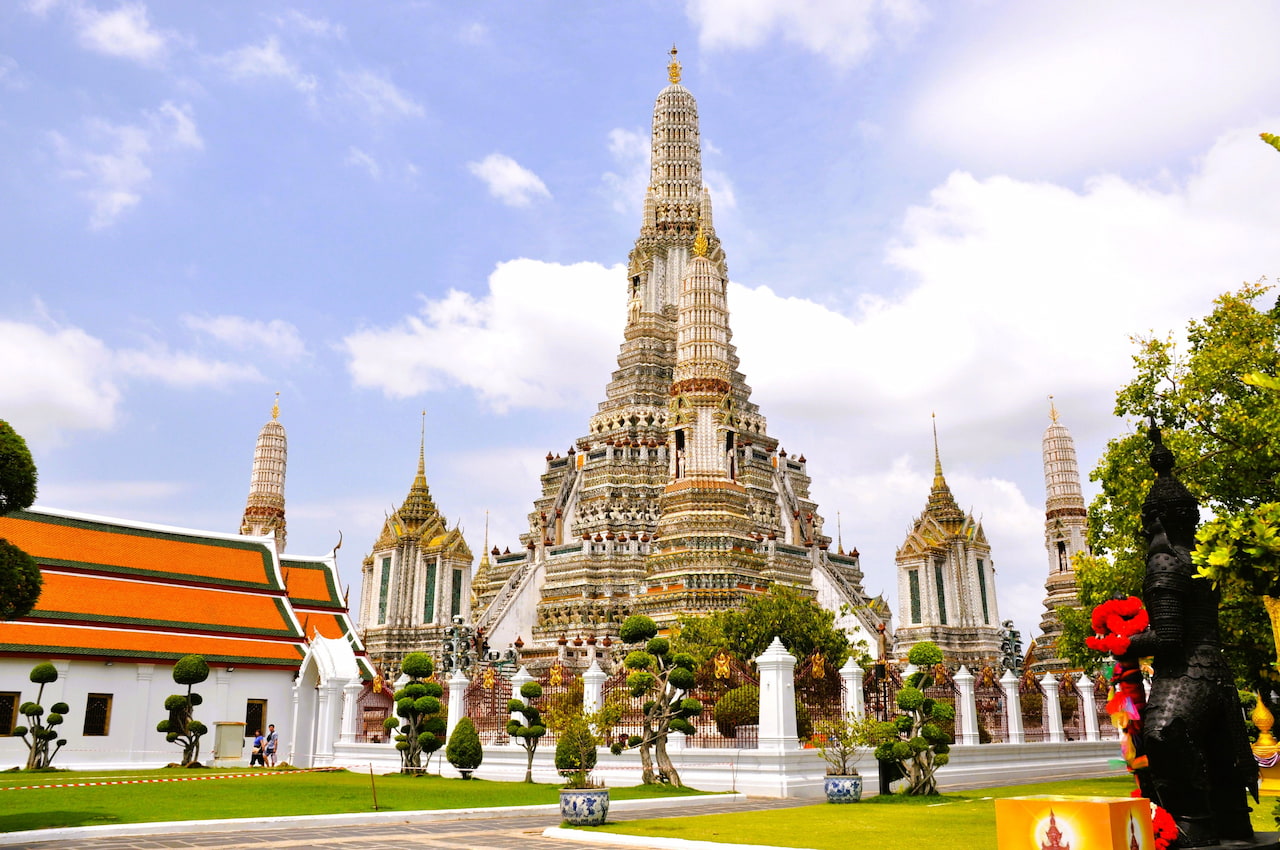
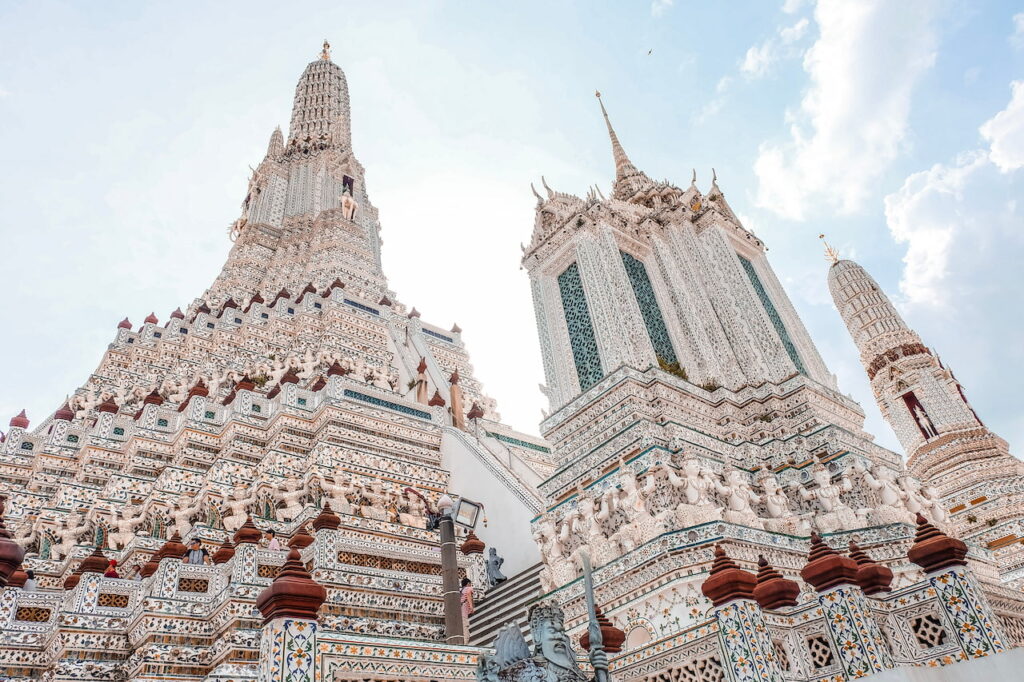
The first thing you notice is the central tower, called a prang. It’s a Khmer-style spire that rises a little over 80 meters, or roughly 265 feet, above the river. Up close, the surface is covered in broken porcelain, seashells and colored glass pressed into the plaster. That’s why it sparkles when the sun hits it.
The temple’s roots go back to the Ayutthaya period, but it became important after King Taksin set up his capital across the river in Thonburi in the late 1700s. The big prang you see today was built up over the early-to-mid 1800s.
It’s also still a working temple, so you’ll see monks and local worshippers along with the tourists. I’d keep that in mind. Keep your voice down, be respectful with your camera, and don’t climb on anything you aren’t supposed to.
Wat Arun Ticket Price and Opening Hours
As of 2026, the entrance fee for foreign visitors is 200 baht, which is about $6. Thai citizens get in free. You pay at the ticket gate, and I’d bring cash, since several temples in this area don’t always take cards. If you read older blog posts, you might see 50 or 100 baht. The price has gone up over the years, so don’t be surprised if the number you see online doesn’t match.
The temple is open every day from 8:00 a.m. to 6:00 p.m. The last entry is usually a little before closing, so don’t leave it to the final minute. Most people spend one to two hours here. If you like taking photos or sitting quietly for a bit, plan on closer to two.
How to Get to Wat Arun
This is the part that confuses people. Wat Arun is on the west side of the river, while most of the big sights, like Wat Pho and the Grand Palace, are on the east side. You can take a taxi over a bridge, but it’s slow and costs far more than it needs to.
The easy way is by boat. Head to Tha Tien Pier, also called Pier N8, which sits right next to Wat Pho. From there, a small cross-river ferry runs back and forth to Wat Arun’s own pier. The ride takes just a few minutes and costs about 5 baht, which is less than 20 cents. Boats go every few minutes during temple hours.
How you reach Tha Tien depends on where you’re staying:
-
By Metro: Hop on the MRT Blue Line and ride it to Sanam Chai station. From there, it’s just about a 10-minute walk to the pier.
-
By River Boat: Grab the Chao Phraya Express Boat from Sathorn Pier (which connects right to the BTS Skytrain at Saphan Taksin) and hop off at Tha Tien. Fares are super cheap, usually running anywhere from 15 to 40 baht depending on which boat you take.
-
By Taxi or Grab: Just make sure to tell the driver to drop you off at Tha Tien Pier rather than Wat Arun itself—traffic around the bridges can get pretty heavy, so this way is much smoother, and then you can just take the quick little ferry across.
Can You Climb Wat Arun?
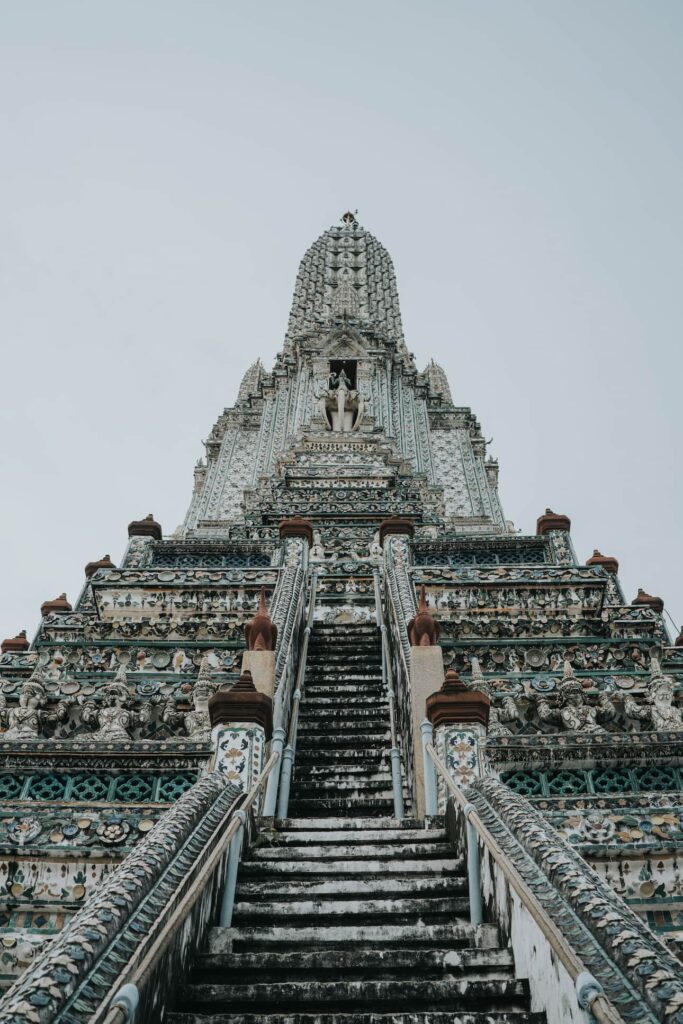
Partly, yes. You can climb the steep stone steps on the central prang up to a terrace partway up the tower. As far as I know, the very top isn’t open to visitors, so don’t expect to stand at the tip.
The steps are narrow and a lot steeper than a normal staircase, almost ladder-like in places. There’s a railing, and you’ll want to use it. Going down feels harder than going up, so take your time and let people pass if you need to.
From the terrace you get a wide view of the river, the roofs of the Grand Palace and the Wat Pho area. It’s worth doing if you’re comfortable with heights. If you aren’t, you’ll still get plenty out of the courtyard and the base of the tower, where the porcelain detail is easiest to see. I’d wear shoes with some grip. Flip-flops and smooth old stone aren’t a great mix.
Best Time to Visit Wat Arun Bangkok
For the temple itself, I’d aim for one of two windows: right when it opens at 8:00 a.m., or the last couple of hours before closing. Mornings are cooler and quieter, and the tour groups tend to arrive later. Late afternoon gives you softer light for photos, and the heat has started to ease.
Heat matters here more than you’d think. There’s very little shade in the courtyard, and the white tower reflects a lot of sun. If you’re in Bangkok between March and May, expect it to be very hot, so bring water and a hat. The cooler, drier months, roughly November to February, are the most comfortable for walking around. In the rainy season, afternoon showers are common, so I’d plan the temple for the morning.
If you want the famous sunset shot, here’s the trick. The temple closes at 6, so you don’t take it from inside. Cross back to the Tha Tien side before closing and watch the tower turn into a dark silhouette across the water. A few rooftop bars near the pier, like Eagle Nest, are popular for this view, but check prices and hours before you go. After dark, the tower is lit up, and it looks good from the riverbank too.
What to Wear
It is a temple and you must dress respectfully. This means that your shoulders and knees should be covered. Lightweight loose clothes are very helpful when the air is humid so a simple T‑shirt, with pants or a long skirt is the best choice. If you arrive wearing shorts or a tank top do not panic. You can rent a wrap or a sarong at the entrance. It is much easier to plan ahead. Also you will have to remove your shoes before entering the halls. Wear shoes that are easy to slide on and off. I can assure you that tying and untieing sneakers every few minutes becomes very tiring.
Combining Wat Arun with Wat Pho and the Grand Palace
These three sit almost across from each other along the river, so they fit into one day. I’d start with the Grand Palace first thing, since it gets crowded fast. Then walk to Wat Pho, which is right next door and costs about 300 baht at the moment. Have lunch near Tha Tien, then take the ferry over to Wat Arun in the afternoon. That order keeps you from backtracking and gives you the late light at Wat Arun.
Be realistic, though. Three big temples in one day in Bangkok heat is a lot. If your energy is low, drop one. I’d keep Wat Arun and Wat Pho and save the Grand Palace for another morning. You can read more in my Grand Palace Bangkok article.
A Few Practical Tips
-
Keep some cash handy in small notes—you’ll definitely need it for the cross-river ferry and buying cold drinks from local stalls.
-
Pack a water bottle and wear a hat, because the sun hits that white stone harder than you’d expect, even if the morning starts out feeling mild.
-
Try to aim for a weekday if you want to dodge the heaviest tourist crowds.
-
Plan to spend around one to two hours wandering around and taking it all in.
-
Watch your footing closely on those steep steps, and remember not to touch the delicate porcelain decorations.
-
Keep your voice nice and low whenever you’re walking near the prayer areas.
Is Wat Arun Worth Visiting?
Mostly yes, with a few honest points. It’s smaller than the Grand Palace, and you can see most of it in about an hour. The climb is limited and can feel crowded. The midday heat is rough. And if temples aren’t really your thing, a view from the riverbank might be enough for you.
But the porcelain detail up close is something photos don’t fully capture, and the little ferry ride across the river is a nice small adventure on its own. For the price, I think it’s one of the better stops in the city.
Final Thought
Wat Arun Bangkok might not be the biggest or even the most famous temple in Bangkok, but honestly, it’s the one that sticks with you the longest. That main tower looks completely different depending on the time of day, taking that little ferry across the river feels like a mini-adventure on its own, and best of all, it’s super cheap.
Just a quick tip: go early in the morning or late in the afternoon, dress respectfully (keep your shoulders and knees covered), pack some water, and make sure to give yourself enough time to just stand there, take it all in, and stare at the tower for a while.
If you’re planning a few days in the city, this fits well with my guide to The Grand Palace Bangkok: An Unforgettable Journey & Guide, which covers everything you need to know about the city’s royal landmark.
At a Glance Verdict
| Category | Rating |
|---|---|
| Overall Experience | ⭐⭐⭐⭐ (4/5) |
| Architecture & Photos | ⭐⭐⭐⭐⭐ (5/5) |
| Value for Money | ⭐⭐⭐⭐ (4/5) |
| Crowds & Quiet | ⭐⭐⭐ (3/5) |
| Family-Friendly | ⭐⭐⭐ (3/5) |
| Time Required | 1 to 2 hours |
| Best For | Photography, history and temple lovers |