Tell me something. When was the last time you were shocked by just seeing a building? Not a little surprised, but really shocked.
You stop walking. Your mouth is open. If you do not remember when that happened, then you have to go to Lahore Fort. That is what happens to travelers when they go to the Sheesh Mahal.
Lahore Fort, which is also known as Shahi Qila, is in the heart of Lahore. It is really big and really beautiful.
It is a place that you will remember for a time even after you go home and get back to your daily routine. This is not a place to visit because it is famous. Lahore Fort is special.
It is worth taking the time to see. You will really like it. It will stay in your memory. And it needs a full day if you really want to enjoy Lahore Fort.
The Moment You Arrive:
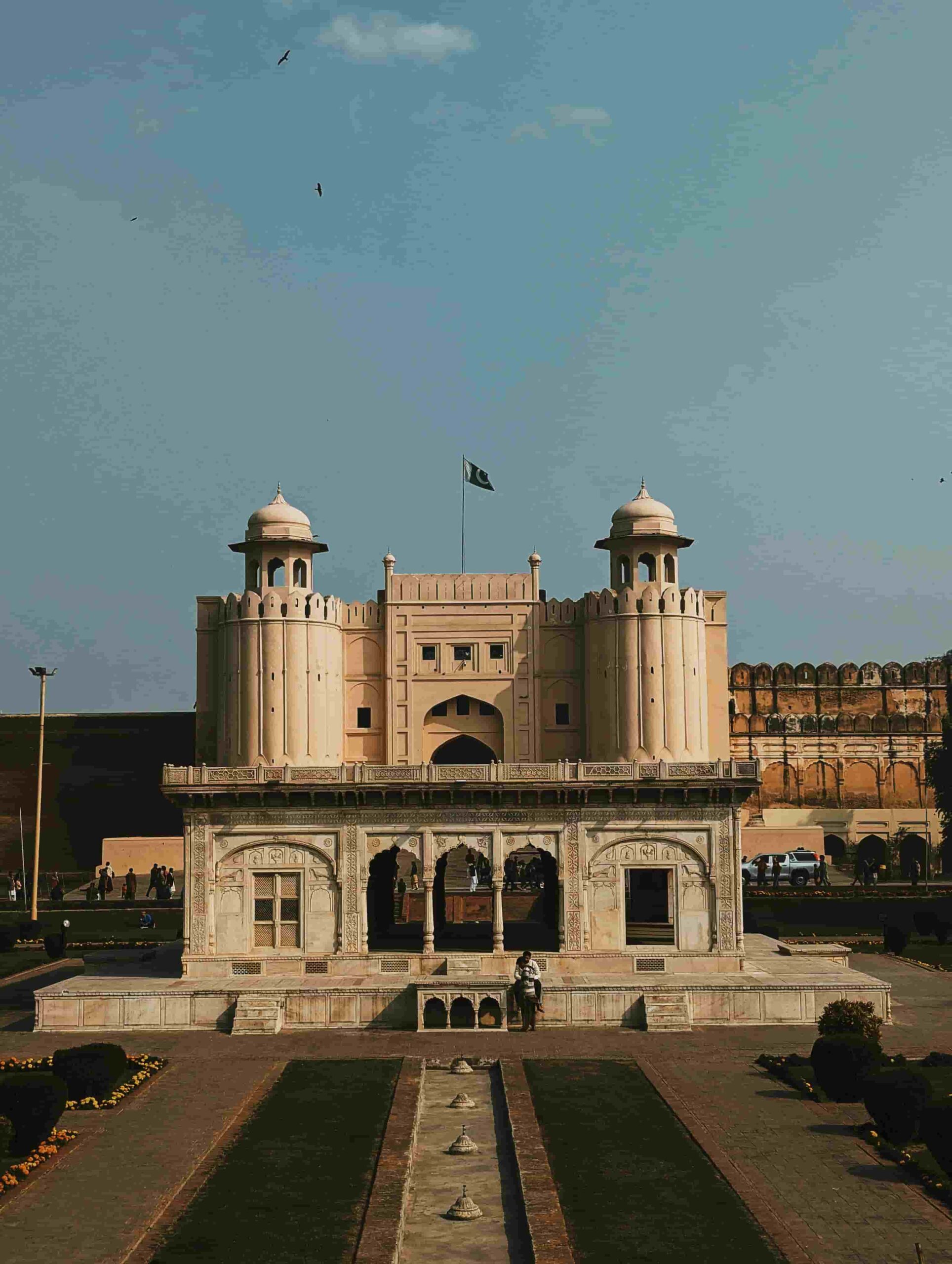
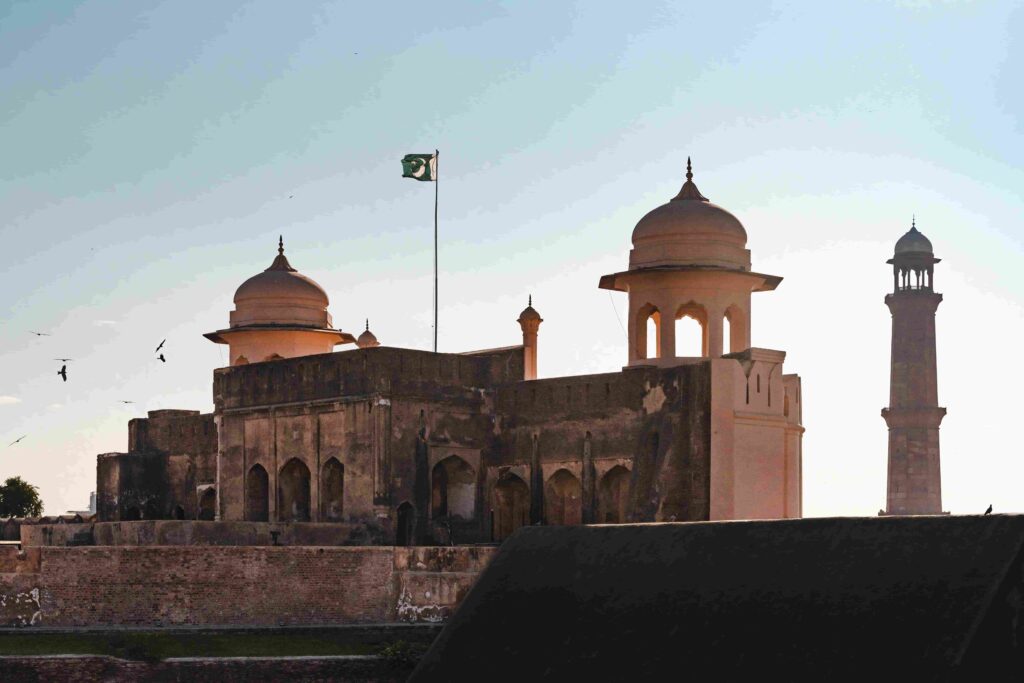
The first thing you see is the Alamgiri Gate — the fort’s massive entrance, built from red sandstone with two curved towers and a decorated archway that makes you feel genuinely small standing in front of it.
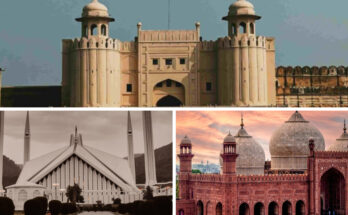
The Alamgiri Gate and the Badshahi Mosque are facing each other and these are both famous landmarks of Pakistan.
You will automatically stop there before going. Look left, look right. Take a photo. This view. The Alamgiri Gate on one side, the Badshahi Mosque on the other, is one of the most beautiful things you will see in Pakistan. It is free just standing on the pavement outside.
"Before you even pay the entry fee, Lahore Fort has already given you something unforgettable."
The Sheesh Mahal — Prepare Yourself.
Here we go. The Sheesh Mahal is really something. The Palace of Mirrors is what people call it.
This is the one room inside Lahore Fort you can’t walk past without stopping — a space where thousands of tiny mirror pieces are fitted into patterns across the walls, arches, and ceiling.
The Sheesh Mahal comes alive when the light hits it — the mirrors catch and scatter it everywhere, and the whole room glows. It is like nothing you have seen before.
It is the room where people walk in with smiles on their faces, but leave with amazement on their faces. You will take a lot of photos in the Sheesh Mahal. You’ll lose count of how many photos you take. This is just what happens when you are in the Sheesh Mahal. So just accept it.
Photography tip: best time for pictures is late in the morning because then the sunlight comes inside through the fort windows. Turn your flash off. The mirrors in the Sheesh Mahal will do all the work.
Get close to the walls. Take photos of the detailed patterns. The portrait mode on your phone works well in the Sheesh Mahal.
The Wall That Never Seems to End:
Before heading inside the fort, take a moment for the Picture Wall — a 1,500-foot stretch running along the outer wall, covered in colored tiles and one of the best photo spots in the entire complex. The Picture Wall has pictures of people hunting, elephants and polo matches.
There are a lot of pictures of battles and history. These pictures are made with thousands of tiles that people put together by hand.
Walk along it slowly — at first it just looks like a pattern, but get closer and you start picking out animals, people, entire scenes playing out tile by tile, like a long picture book painted onto the fort’s wall. Bring binoculars if you have them; there’s plenty of detail near the top that most people miss.
The Naulakha Pavilion — Small but Unforgettable
Most people sprint off to the next mega attraction after the Sheesh Mahal. But they miss a beautiful spot.
Just around the corner is the Naulakha Pavilion – a small building of white marble decorated with the most intricate stone inlay that you are likely ever to see. Minute colored stones are embedded in white marble, with flowers and tendrils and geometric patterns created by each and every single piece placed by hand.
It’s small. It’s easy to walk right past. But stand in front of it for five minutes and stare and you’ll know that what you are seeing is something incredible.
The level of quality construction makes you marvel at how on earth a person ever possessed the time and skill and eyesight to have executed this piece of work. It’s probably one of the most exquisite buildings in the whole fort.
"The Naulakha Pavilion is proof that the best things in Lahore Fort are sometimes the ones you almost walked past."
Find a Quiet Spot and Just Sit:
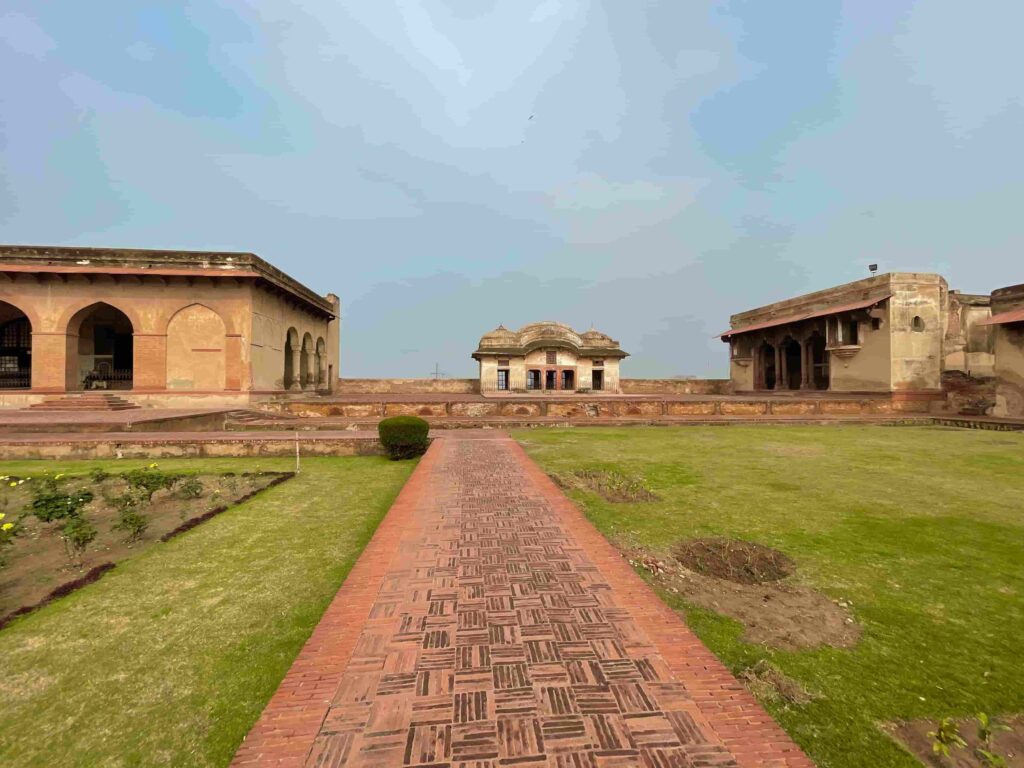
Sometime during your visit, just stop. Find a cool corner of one of the open courtyards, sit on the stone and just watch for ten minutes. No camera, no phone, no thinking about where to visit next. Just sit. Watch the pigeons. Hear the wind sigh through the archways. See the red stone and how the light changes on it.
Feel the weight of the age, quietness, and solidity pressing on you. Travel isn’t always about the exciting bit; sometimes it’s when a place finally surrounds you and you actually know where you are, and Lahore Fort provides that opportunity.
Your Must-See List Inside the Fort
Do not leave without seeing these:
- Sheesh Mahal — the mirror palace, your number one priority
- Alamgiri Gate — photograph it from outside before you enter
- The Picture Wall — walk the full length, get close to the tiles
- Naulakha Pavilion — do not rush past the marble inlay work
- An open courtyard — sit quietly for ten minutes, you will thank yourself
- Any high point — find a rooftop view over Lahore’s old city
Best Time to Visit — And What to Wear
Timing matters more than people think. Go early. The gates open in the morning and the crowds are still thin. You get the Sheesh Mahal almost to yourself. No pushing, no waiting for a clear photo. By noon, tour groups arrive in numbers, and the courtyards start to feel busy.
Summer afternoons in Lahore are brutal. The stone holds heat and the open courtyards offer little shade. Carry water. Wear comfortable shoes, because the fort is bigger than it looks on a map, and you will walk far more than you expect.
Winter mornings are colder but kinder to the eyes. Soft light. Fewer people. Better pictures.
One more thing. Entry tickets are cheap for locals and slightly higher for foreign visitors, so keep that in mind before you plan your budget for the day.
How to Get to Lahore Fort
Getting there is easy. Lahore Fort sits right in the old city, so most rickshaws and taxi drivers know the spot instantly. Just say Shahi Qila. That is enough.
If you are already near Badshahi Mosque or Minar-e-Pakistan, you can simply walk over. The whole area is connected, and walking lets you soak in the old city streets before the fort even begins.
Parking is available near the entrance, but on weekends it fills up fast. Try to arrive early if you are driving yourself. Public transport is also an option. Lahore’s metro bus system runs close to the old city, and from there it is a short walk.
Whichever way you choose, do not rush the arrival. The walk up to Alamgiri Gate is part of the experience. Let it build the anticipation.
Local food stalls line the roads nearby too, so grab breakfast before you go in — a warm cup of doodh patti or fresh paratha sets the mood perfectly. Trust me, hunger and history do not mix well, so eat first, explore later, and thank yourself afterward.
Final Thought:
Lahore Fort is that kind of place which is not easy to describe to one who has not visited. Not because it is complicated, but because the experience of it is too hard to articulate. The sheer size. The exquisite detail. The delightful surprise you receive at every turn. The way you feel insignificantly amazed and incredibly lucky.
Give it a good morning. Roam around slowly. Examine all the elements thoroughly. Sit at one place for some time. And the minute you exit from the Alamgiri Gate and walk into the vivid hustle and bustle of Lahore, you will instantly realize—it was worth every second.
So please visit. It is an unforgettable experience.
After visiting Lahore Fort, you can also visit the Badshahi Mosque, which is right in front of the fort.