There are a lot of places in the world that you have visited to take photos, post them on your social media, and move on. Then there comes a place that makes you stop and take off your sunglasses, and you just stare at it in silence.
The Pakistan Monument in Islamabad is exactly that second kind of place.
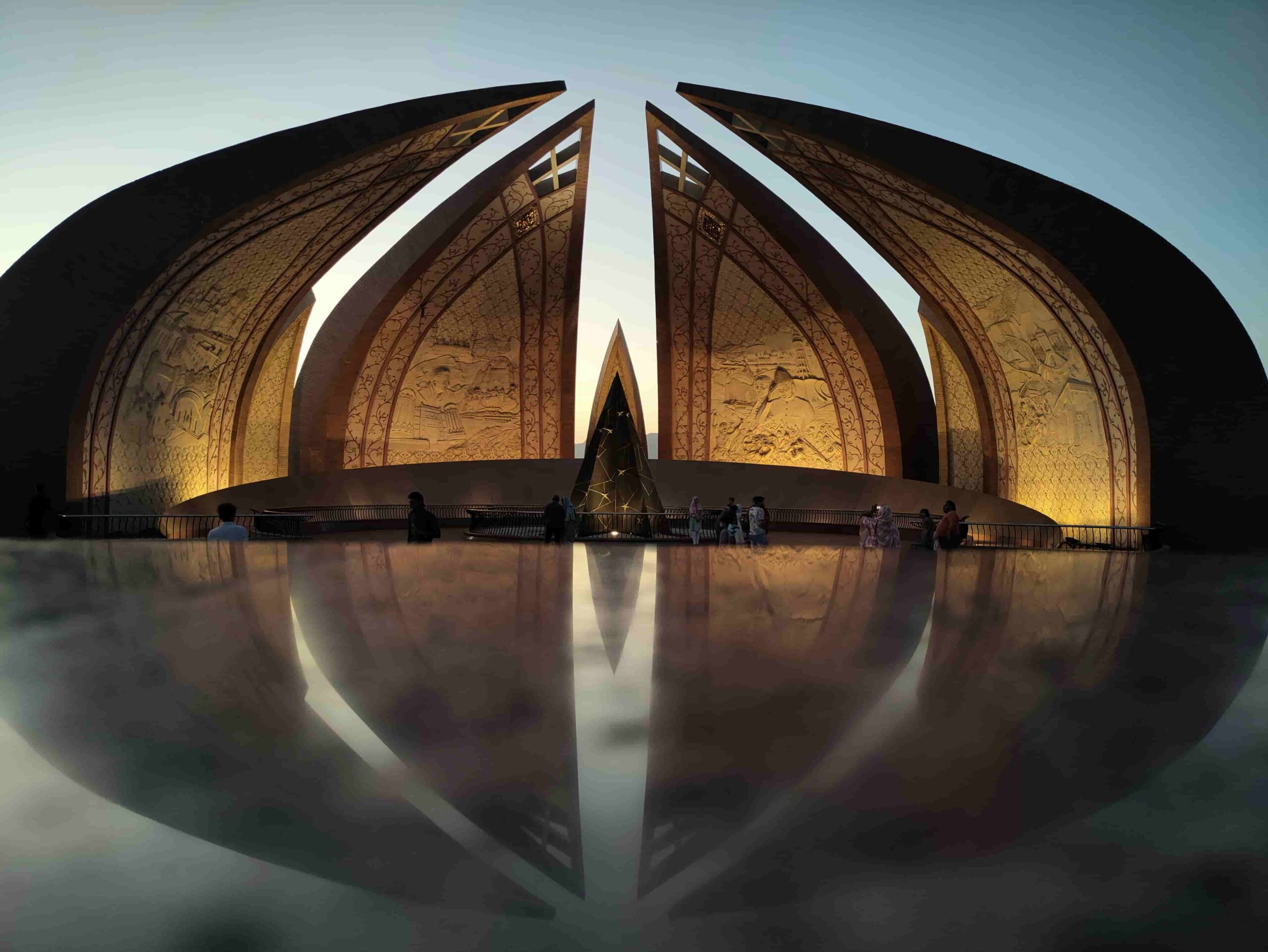
If you see it from an airplane, it looks like a star and a crescent moon cut into the green hills of Islamabad. It is gorgeous. If you stand right in front of it, the Pakistan Monument looks like a beautiful flower that is growing towards the sky. When you walk inside the walls of the Pakistan Monument, you see that it is not just made of stone. It is like a love letter to the history and culture of Pakistan.
The First Impression: Standing on Top of the World
I recall the drive on the meandering roads up to the Shakarparian Hills. The air always feels that much cleaner up here in Islamabad. Dense greenery with the wide-open sky and, suddenly, a huge building appears out of nowhere, made of brick-red granite.
When I walked out onto the terrace, the first thing that I noticed was not just the monument. It was the view that I saw. The monument sits high on the hill, and the view from up there is something else — the whole of Islamabad spread out below, its roads running clean and straight through the green, with the Margalla Hills rising hazy in the distance.
Honestly, it’s the perfect place just to take a deep breath and forget about the noisy traffic below.
Decoding the Architecture: More Than Just Pretty Petals
When you look at the monument, and you see those petal designs, your mind immediately goes, “Wow, that’s a cool design.” But it wasn’t built just to look pretty. There is a deep, beautiful meaning hidden in every single stone here.
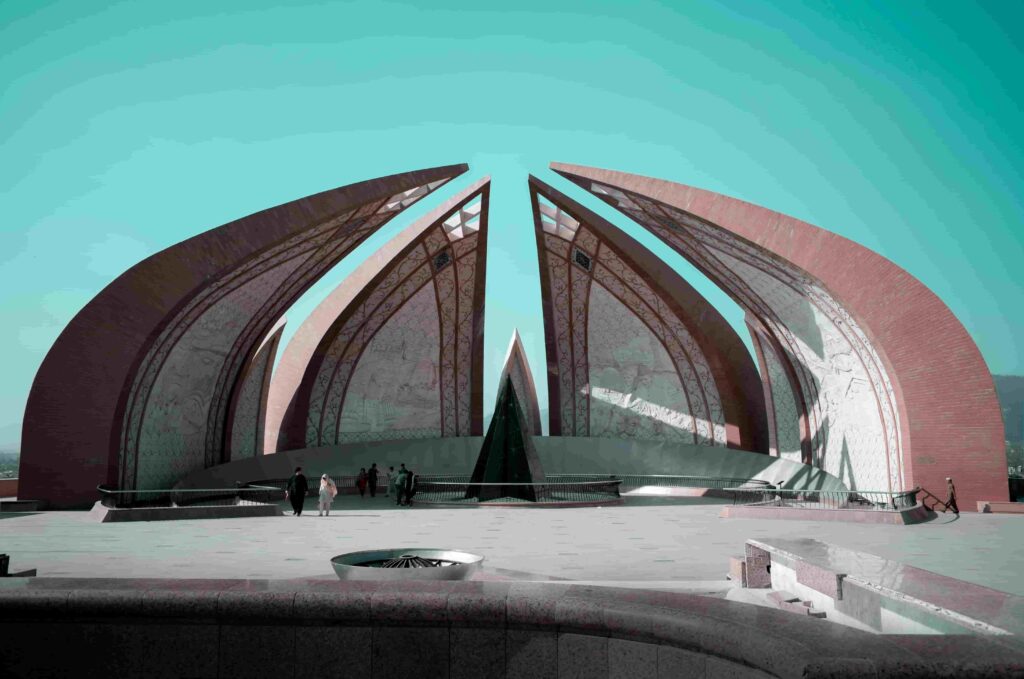
The structure is made almost entirely of high-quality granite, with the petals carved and assembled by skilled stonework specialists. It features four large petals and three smaller ones. I met a local guide there who explained it to me beautifully:
- The four big petals stand tall and proud, each one representing one of Pakistan’s provinces — Punjab, Khyber Pakhtunkhwa, Sindh, and Balochistan — leaning gently toward each other as if holding something between them.
- Tucked between them are the three smaller petals, standing for Gilgit-Baltistan, Azad Jammu & Kashmir, and the country’s minority communities.
The seven petals all stand completely on their own, and yet are angled towards each other beautifully. A clear physical representation that no matter how different our languages, no matter how different our cultures, as a nation, we are one.
There’s a gleaming black granite platform in the middle, with a stainless steel crescent. Take a good long look, and there are the inspirational words of Quaid-e-Azam Muhammad Ali Jinnah and Allama Iqbal inscribed on it. I don’t know, I get a bit goosebumps.
The Murals: A History Book Carved in Stone
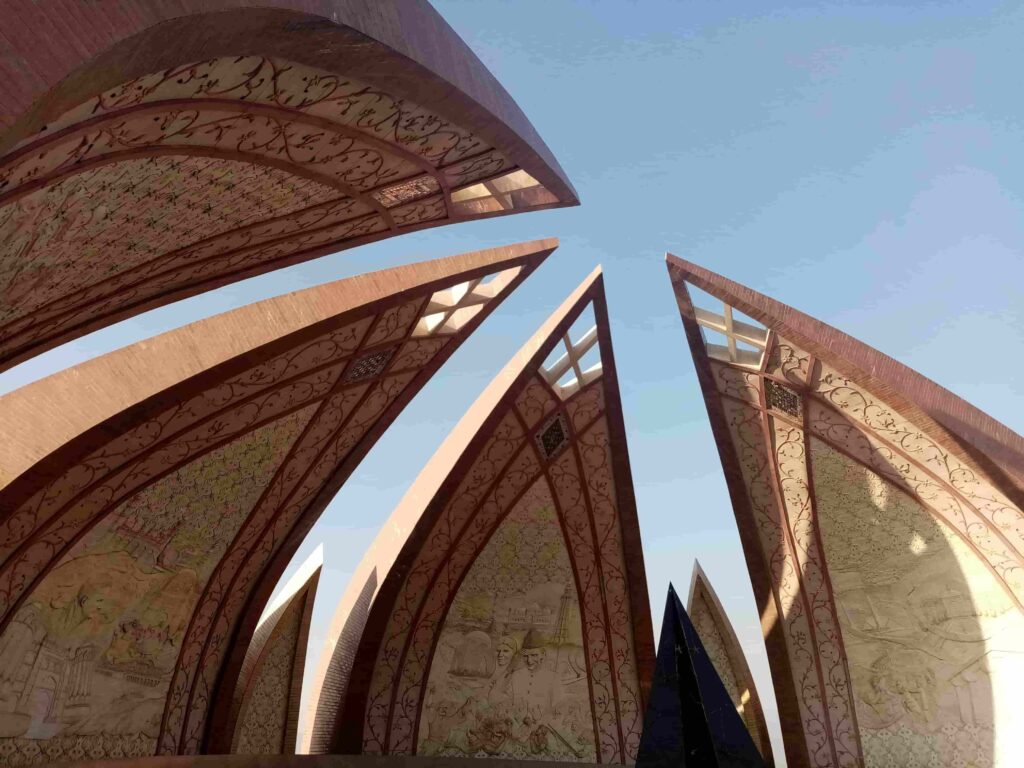
As I walked closer and stepped inside the petals, my jaw dropped. The interior walls of the petals are covered in really detailed murals that were carved by hand.
It feels like walking through a book that shows you what happened a long time ago. You do not have to read a lot of words. You can just look at the pictures and the artwork.
I spent all day just looking at the carvings on the walls of the large and small petals. I saw Lahore Fort, the Badshahi Mosque, and Minar-e-Pakistan. The walls of the petals were also carved with those heroes who fought for freedom. The carvings on the walls of the petals are so good that it feels like the stones are telling me stories from the past, about the large petals.
The Wax Museum: Meeting History Face-to-Face
Across from the main monument building is the Pakistan Monument Museum. Let’s face it. Sometimes museums can be pretty dull. This one is amazing. The museum is a wax museum that takes you on a journey through time. It starts with the Indus Valley Civilization and Mehrgarh, showing how long our roots go back. As you walk through the lit halls, you see real-life-sized wax statues of historical figures.
The settings are created well with lights and backgrounds that make you feel like you are right there with Quaid-e-Azam as he gives a speech. You can even sit next to poets and thinkers who dreamed of this country. There is a library and a cool auditorium called the Panorama Hall that seats 62 people. Be sure to visit the museum when you’re here.
What Nobody Tells You: Tips for the Perfect Visit
If you want to make the absolute most of your trip to the Pakistan Monument, here are a few insider tips from my own experience:
- Catch the Golden Hour (Sunset is Fire!)
While morning is quiet and peaceful, the best time to visit is actually afternoon, just before sunset. The Margalla Hills look amazing when the golden sun dips behind them and its warm light shines on the granite petals of the structure. This makes the whole thing glow like gold. For people who love photography, it’s a dream come true to capture the Pakistan Monument in this light. - Stay for the Night Lights
Do not run away as soon as the sun goes down. Wait for a few minutes. At night they turn on the lights, that illuminate the entire monument against the pitch-black sky. The monument looks absolutely magical. It feels incredibly peaceful at night, all lit up against the dark sky. - Wear Comfortable Shoes
The complex spreads over almost 7 acres of land. There is a lot of walking on stone pavements, terraces, and steps. Trust me, leave the uncomfortable shoes at home and wear a good pair of sneakers.
Quick Travel Guide (Everything You Need to Know)
- Location: On the top of Shakarparian Hills, near Srinagar Highway, Islamabad. You can easily get here using Careem, InDrive or a local taxi.
- Entry Fee: The entry fee is nominal for locals, with a separate (higher) rate for foreign visitors. Rates for the monument grounds and the museum are ticketed separately, so it’s worth checking current prices on-site or on the official Ministry of Culture page before you go.
- Timings: The place usually opens from 9:00 AM to 10:00 PM every day. And the best time for you to visit is around 5:00 PM because you will enjoy both the daylight and the night view of the monument.
- Best Season: If you visit from October to March, you’ll have a great time. The weather in Islamabad is cool and crisp during these months, making it perfect for walking around.
The Garden of Martyrs Nearby
Right next to the monument, there is a quiet spot called the Garden of Martyrs. Most visitors rush past it, heading straight for the petals, but it is worth slowing down here for a bit. Rows of trees line the pathway, each one planted in memory of soldiers who gave their lives for the country. It is peaceful. Much quieter than the main monument area.
I walked through it almost by accident, and I am glad I did. There is something humbling about reading the names on small plaques while birds chirp overhead. It does not take long, maybe fifteen minutes, but it adds a different layer to the whole visit. The monument shows you the idea of Pakistan. The garden reminds you of the price that was paid for it.
Final Thought: A Place to Be Felt
As I stood on the viewing platform watching the city lights of Islamabad turn on, I felt the evening breeze on my face. I realized something. The Pakistan Monument isn’t a tourist spot. It is a place for the people who gave up a lot so that we can be free. It makes you feel proud and a little emotional. It makes you feel inspired. When you visit Islamabad, don’t just look at it from a distance. Go up the hill. Stand inside the stone flower. Let the spirit of Pakistan wash over you. It is an experience you will always remember.
I still think about that walk back down the hill. The whole complex spreads over almost 7 acres, so you actually need a couple of hours here, not just a quick stop for photos. I remember sitting on the steps near the petals for a while, just watching other families walk around, kids running between the columns, an old man sitting quietly with his hands folded like he was praying.
You don’t need to know the history to feel something here. But once you do know it, once you know what those petals actually mean, the place hits different. It stops being just a nice building for pictures. It becomes something you carry with you.
That’s the thing about the Pakistan Monument. It doesn’t ask much of you. Just go, walk around, sit for a bit, and let it speak for itself.
If Islamabad’s got you hooked already, don’t miss the Faisal Mosque too — completely different vibe, but just as worth it.
The GlanceAsia Verdict
If you only have one day in Islamabad, the Pakistan Monument is the thing to see. Places like the Faisal Mosque are good for peace. The Pakistan Monument makes you feel something real for Pakistan. My best advice is to go around 5:15 PM. You can see the wax museum, watch the sunset over the Margalla Hills and see the big granite petals light up at night. The Pakistan Monument gives you three things to do at the same time, and it is almost free. It is something that will stay with you forever.