The Badshahi Mosque: A Trip I Still Think About
I’ve been to a lot of places in Pakistan, but nothing quite prepared me for standing in front of the Badshahi Mosque in Lahore. Everyone talks about the Taj Mahal when Mughal architecture comes up, and sure, it deserves the hype. But honestly? I think Badshahi Mosque deserves a spot right next to it, if not above.
I remember getting out of the rickshaw near the Walled City, walking through the narrow streets, and then suddenly the gate just opens up in front of you. I actually stopped walking for a second. The red sandstone walls are massive, way bigger than I expected from photos, and there’s something about seeing it in person that no picture really captures.
So What Exactly Is This Place?
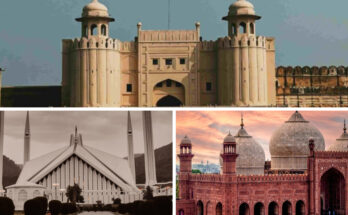
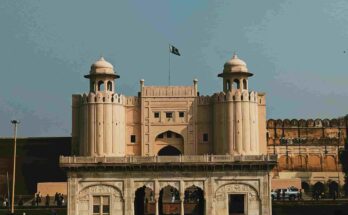
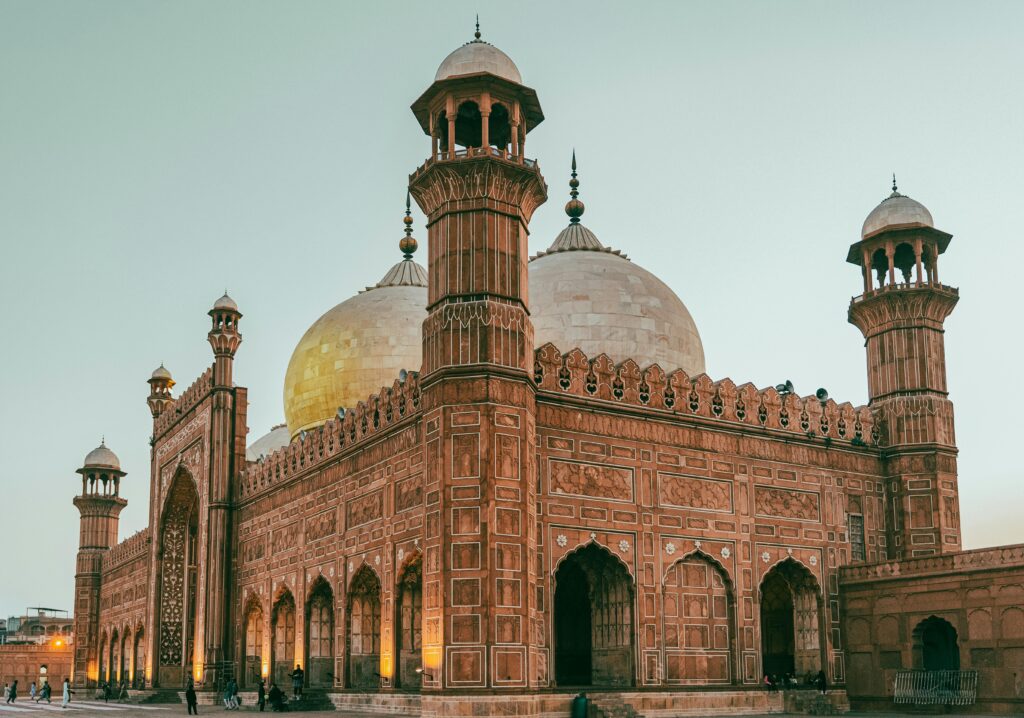
The Badshahi Mosque, or “Royal Mosque,” is one of the biggest mosques in the world. It’s sitting right next to Lahore Fort in the old walled city, and together they make this skyline that honestly looks unreal at sunset. If you’re doing a Lahore trip, seeing both on the same day just makes sense — they’re a two-minute walk apart.
A Bit of History (I Promise I’ll Keep This Short)
Emperor Aurangzeb had this built back in 1671, and it only took two years — finished in 1673. For a structure this size, that’s honestly impressive. Aurangzeb wasn’t exactly known for being relaxed about religion, and you can feel that seriousness in how the Badshahi mosque was designed. It wasn’t just meant to look nice. It was meant to make a statement.
The Numbers Are Kind of Insane
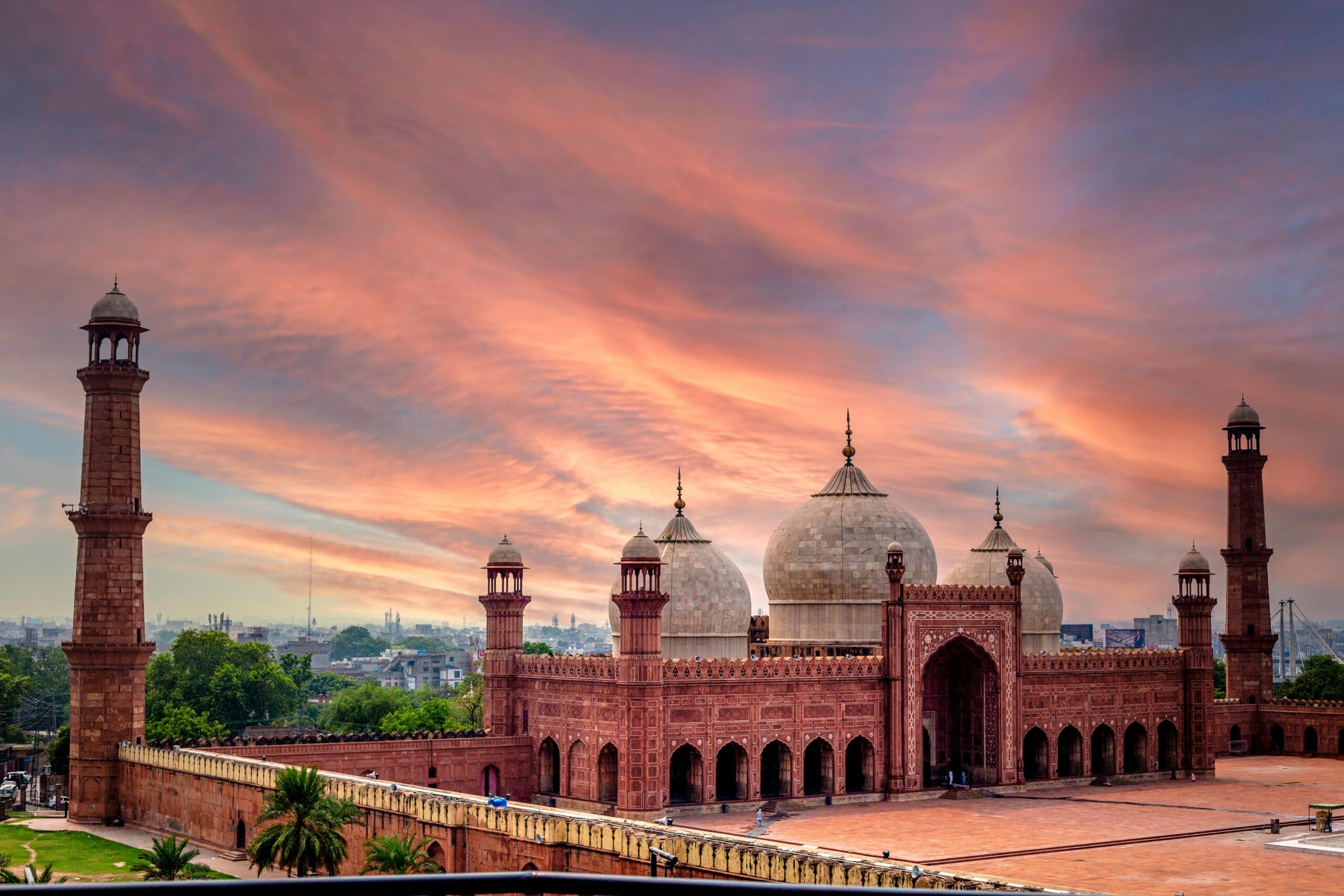
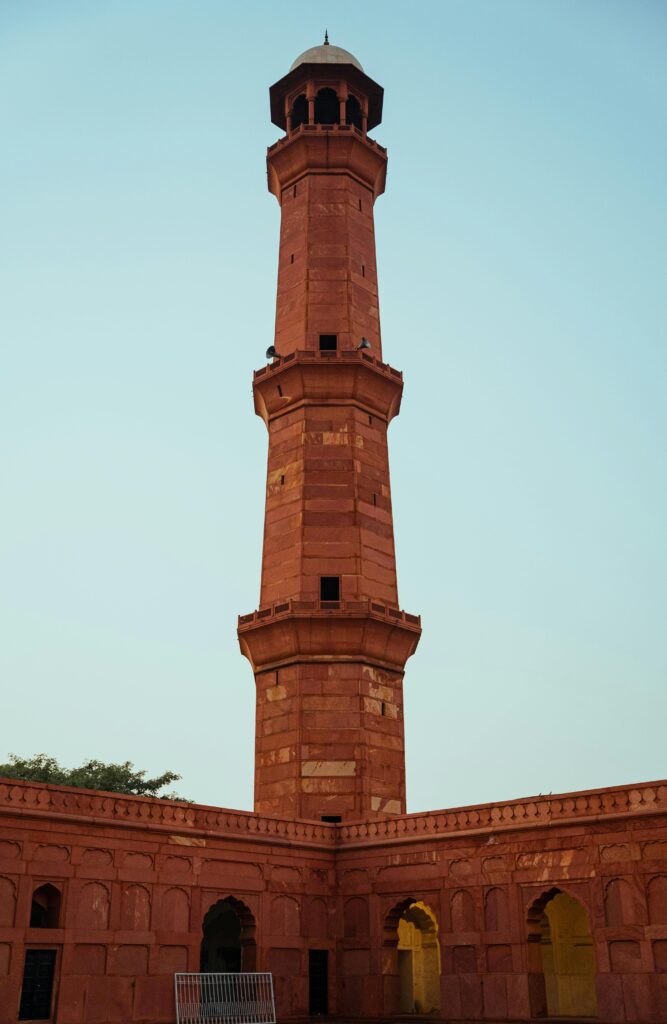
Okay, so I looked this up after my visit because I couldn’t believe it: the courtyard can fit around 100,000 people at once. That’s not a typo. It spans roughly 276,000 square feet. There are four minarets, each standing 53 meters tall, and three domes covered in white marble that just glow against the red sandstone everywhere else. I visited close to sunset and the color contrast was honestly one of the best things I’ve photographed on any trip.
The Architecture Bit
You can tell this is Mughal through and through — Persian influence, Central Asian touches, all blended with local South Asian style. If you’ve seen Jama Masjid in Delhi, you’ll notice similarities right away. But Badshahi has its own personality.
The entrance gate is a whole experience by itself. It’s covered in these intricate carved patterns, and walking through it genuinely feels like a transition into somewhere different. The minarets used to be where the call to prayer was announced from, and honestly, even standing there today during prayer time and hearing it echo across that huge courtyard gave me chills.
It Wasn’t Always a Mosque, Though
This part surprised me the most. During the Sikh Empire in the early 1800s, this Badshahi mosque was actually used to house horses and as a military barracks. Yeah — horses, inside one of the most beautiful mosques on earth. Wild to think about.
Then the British took over and kept using it for military stuff too. It wasn’t handed back to Muslims for prayer until 1856, which means it sat unused as a place of worship for almost 200 years. Somehow it survived all of that and got restored properly. You’d never guess any of this history just by looking at it today.
There’s a Small Museum Inside Too
Right next to the main structure, there’s a gallery with some genuinely significant Islamic relics — items believed to have belonged to the Prophet Muhammad (PBUH), like a cloak and sandals. I’m not going to pretend I wasn’t moved standing in there. Even if you’re not visiting for religious reasons, the atmosphere in that room is different. Quieter. People speak in whispers without anyone telling them to.
Stuff You’ll Actually Want to Know Before Going
Entry: Getting into the Badshahi mosque itself is free. If you want to check out the relic museum, there’s a small fee, but it’s minimal — worth double-checking the current price at the counter since these things change.
Timings: It’s open from early morning until after Isha, but it closes briefly five times a day during prayer times. Just plan around that instead of showing up right at prayer time and being confused why you can’t go in.
What to Wear: Cover your head if you’re a woman (they’ll hand you a scarf if you don’t have one), and shoes come off before you step onto the courtyard. There are shoe-keeping stalls outside — a small tip is appreciated.
Getting There: It’s in the Walled City, right beside Lahore Fort, close to Delhi Gate. I’d say get dropped off nearby and walk the last bit — the streets get narrow and a rickshaw can’t really navigate them anyway.
Best Time: Go early morning or late afternoon. I went in the afternoon in summer once and regretted it almost immediately — the stone floor gets seriously hot under your bare feet. Learned that the hard way.
One thing I wish someone had told me beforehand: the parking outside gets packed fast, especially after Asr, so I ended up parking near Delhi Gate and walking almost ten minutes to actually reach the entrance. While I was putting my shoes in at the stall outside, the guy there — must’ve been in his fifties, been doing this job for years he said — told me the best time for photos is right after Asr prayer, once the afternoon crowd starts thinning out but before the evening rush comes in for Maghrib.
I tried it the next time I went and he was right, the light hits the domes differently around then. I gave him around Rs. 50 for keeping an eye on my shoes, and honestly it felt like the least I could do considering how many pairs he was juggling that day.
If You Can, Go During Ramadan
I haven’t personally experienced this yet, but from what locals told me, visiting during Ramadan for Taraweeh prayers is on a completely different level. The whole courtyard fills up at night and the energy is apparently unlike anything else. It’s on my list for next time.
Why This Place Actually Matters
Badshahi Mosque isn’t some old building people just visit for photos. It’s alive. People pray here every day, and on Fridays the courtyard genuinely fills up with thousands of people. During Eid, it’s even more — we’re talking hundreds of thousands.
For me, walking through it felt like stepping into a piece of history that never actually stopped being used. It’s not frozen behind glass somewhere. It’s still doing exactly what it was built to do, 350 years later.
Would I Go Back?
Without question. If you’re in Lahore and you skip Badshahi Mosque, you’re genuinely missing one of the most impressive things Pakistan has to offer. Go early, take your time, and don’t rush through it just to check it off a list. Look up at those minarets against the sky. That’s the moment that stays with you.
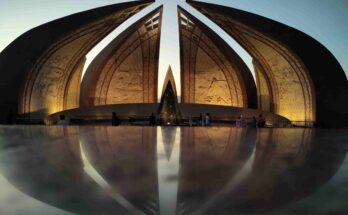
And if you’re continuing your trip afterward, the Faisal Mosque in Islamabad is worth seeing too — completely different vibe, more modern, but equally memorable in its own way.
Final Thoughts
If there’s one place in Pakistan that truly captures the soul of the country — its faith, its art, its history — it might just be the Badshahi Mosque. I’ve visited a fair number of historical sites across Asia, and very few of them leave you standing in silence the way this one does. It’s more than 350 years old, and honestly, it doesn’t look tired at all. If anything, it looks timeless, like it’s just getting started.
What stays with me isn’t just the size of the place or the numbers I mentioned earlier. It’s the small moments — the call to prayer echoing off those walls, the quiet in the relic room, the way the marble catches light differently depending on what time you show up. No two visits feel exactly the same, which is probably why people keep coming back to it generation after generation.
If you’re planning a trip to Lahore, don’t treat this as a quick stop on your itinerary. Give it at least a couple of hours, ideally paired with a visit to Lahore Fort, since the two sit right next to each other and share so much of the same history. Walking between them, you really start to understand how connected the Mughal-era city once was.
And if this kind of history and architecture is what draws you in, it’s worth building out a longer trip around it. I’d suggest checking out our guide on budget travel across pakistan if you’re trying to plan something bigger without spending a fortune — Lahore fits into that kind of trip really well.
Go early. Stand still. Take it all in slowly. Don’t forget to look up at those pillars — white against the blue sky by day, or glowing under floodlights at night. That moment, right there, is why we travel.
And once you’ve experienced Badshahi, don’t stop there — the Faisal Mosque in Islamabad offers a completely different, more modern take on mosque architecture, and it’s just as much worth the trip.
At Glance Verdict
Here’s the quick-glance table for Badshahi Mosque:
| Item | Detail |
|---|---|
| Name | Badshahi Mosque (Royal Mosque) |
| Location | Lahore, Walled City, right next to Lahore Fort |
| Built by | Emperor Aurangzeb |
| Construction | 1671–1673 (just 2 years) |
| Courtyard capacity | ~100,000 people |
| Area | ~276,000 sq ft |
| Minarets | 4, each 53 meters tall |
| Domes | 3, white marble |
| History twist | Used as a stable/barracks during Sikh era, British also used it for military purposes — reopened for prayer in 1856 |
| Entry fee | Mosque free, relic museum has a minimal fee |
| Timings | Early morning to Isha, closes briefly 5 times a day for prayers |
| Dress code | Head covering (scarf provided), shoes off before entering courtyard |
| Best time | Morning or late afternoon — floor gets very hot at midday |
| Nearby | Lahore Fort (2 min walk), Delhi Gate |
| Verdict | Must-visit — a living, breathing example of Mughal architecture, not just a photo stop |