There are some places in the world that make you stop, take a deep breath, and just stare at them. Naran Kaghan Valley is one of them. Located in the Mansehra District of Khyber Pakhtunkhwa province, Pakistan,
this valley is not just a tourist destination. It is an experience from golden meadows glowing at sunrise to glacier lakes that mirror the sky. Naran Kaghan has something that no photographer can fully capture.
If you are looking for some place like that, then Naran Kaghan is the best destination for your trip.
A Valley With Many Faces
Naran Kaghan Valley stretches 155 km from the small town of Balakot to the iconic Babusar Pass, with the scenery shifting constantly — like a new painting revealing itself every few miles.
You’ll drive through pine forests, rivers, villages and small towns nestled on the side of the valley and, all of a sudden, find yourself in front of a view taking your breath away.
Naran sits at approx 2,500m altitude and is the center of the valley. During summer, this little town is very busy and crowded with people from everywhere in the world, hotels, food stalls and the omnipresent Kunhar River roaring next to you.
Step out, however, from this lively place, and the noise disappears completely, leaving just you and a quiet, imposing, enormous nature.
"The valley does not ask for your attention. It simply takes it — gently, completely, without warning."
Lake Saiful Muluk — The Crown Jewel
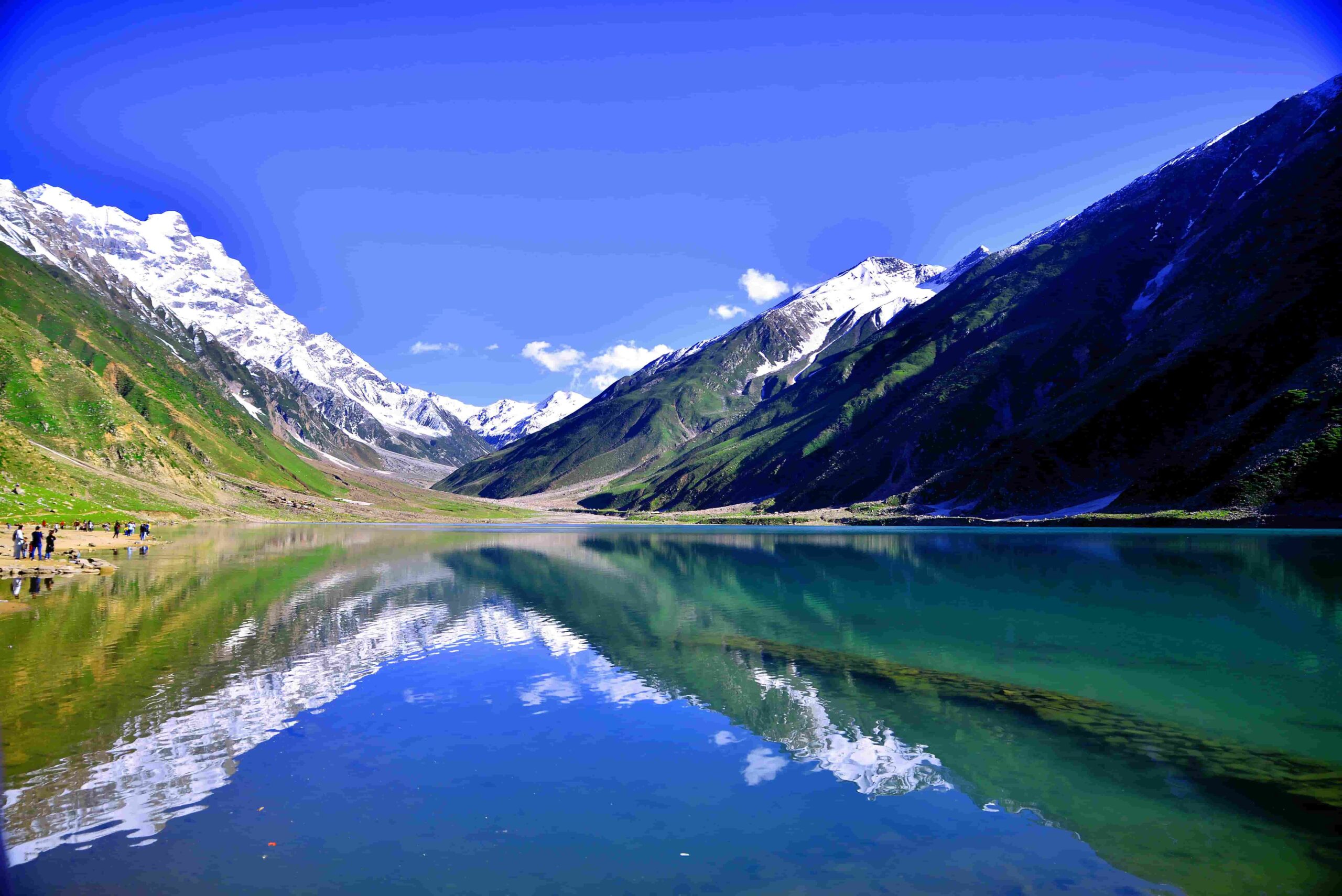
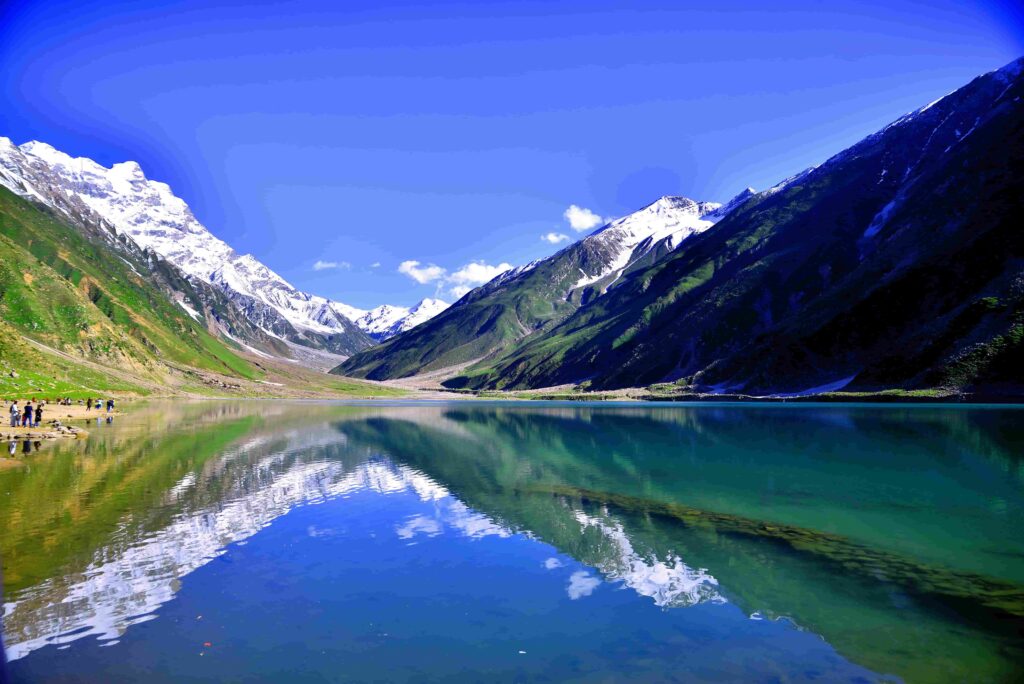
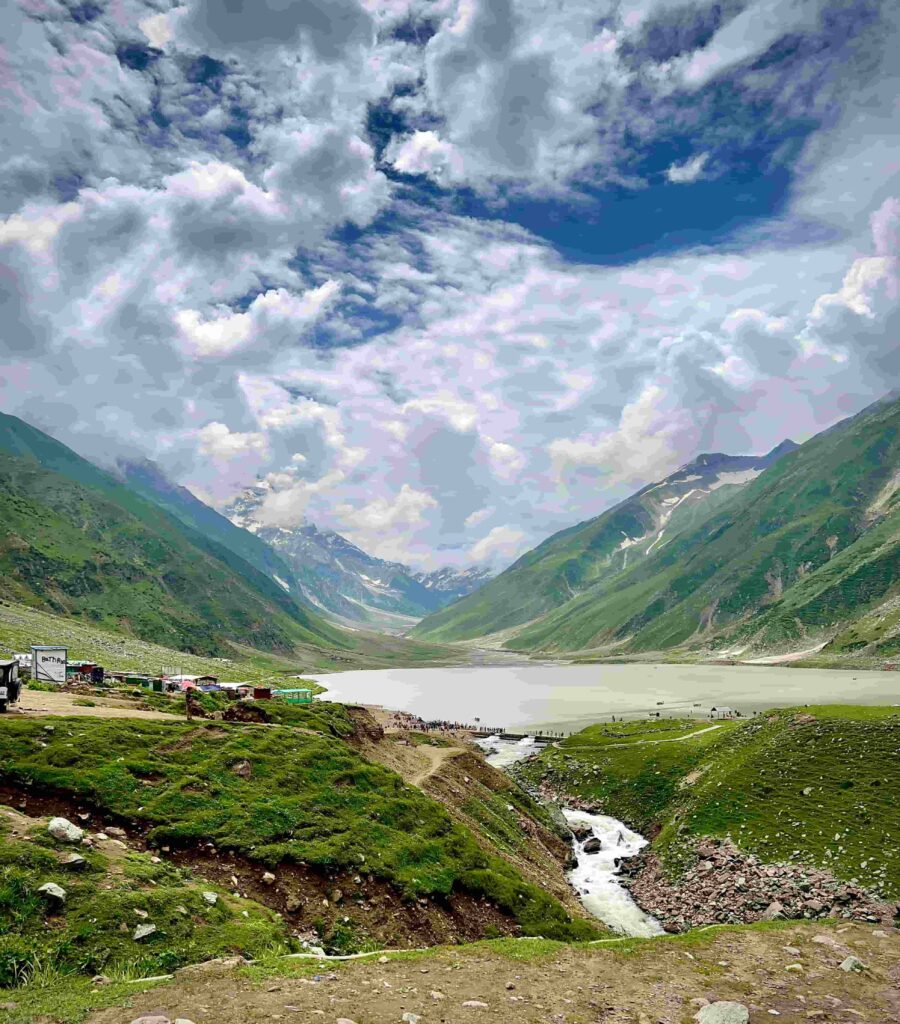
If you visit Naran Kaghan but don’t see Lake Saiful Muluk, then it means you didn’t see anything! Sounds harsh, but it’s definitely true. Lake Saiful Muluk is a high mountain lake 3,224m above sea level and one of the most beautiful places you will find in all of Pakistan. The water is a deep, clear blue, and on calm days the snowy peaks around it reflect almost perfectly off the surface. Three sides of the lake are enclosed by mountain walls, with a glacier valley visible at the far end. Walk the stony path around the edge, hire a horse, or just sit and take it in — all reasonable ways to spend an afternoon here.
The Terraced Hillsides and Golden Sunsets:
However, many people forget to appreciate the agricultural aspects of the Naran Kaghan Valley—this is actually one of the more underrated features. The mountains are carved into stepped terraces, formed by the villages of locals who have lived there for many years.
These stairs climbing up the mountain seem to particularly glow in the golden hour; the sun, hovering low behind the mountains, illuminates the whole valley in a beautiful warm amber.
Small stone houses and wooden huts can be seen on the terraces, and tall, pine-like trees accompany them. The scene looks like something out of a painting — or a fairy tale told to children.
The simplicity of this image, the calm flow of mountain life, has a soothing quality.
For photographs, Naran Kaghan is a paradise; no matter which direction you are pointing your camera, there is a detail to be snapped — a dusty trail winding on; a stand of pines; a house with a bright red roof reflecting the last rays of sunlight.
Babusar Pass — The Road to the Sky:
To the north side of Kaghan, there lies the Babusar Pass, the highest spot of the Kaghan Valley, at around 4,173 meters above sea level, and it links the valley to the Karakoram Highway.
The pass over Babusar is a treat in itself — high mountain meadows, cattle and nomadic herders roam the fields, the views seem to go on forever in all directions.
Babusar Pass is open to vehicles only for a few months of the year, usually July to September, which heavily depends on how snowy it is each year.
When it’s open, there are usually thousands of tourists, and I can see why — standing on the pass, nothing but sky and mountain range surrounding you, you feel insignificantly small. In a good way.
"At Babusar, the clouds are not above you. Sometimes, they are right beside you — drifting past at eye level like slow, quiet travellers."
What to Eat, Where to Stay:
The town of Naran does not have a problem with the food and lodging. The local ‘dhabas’ that are very similar to roadside restaurants offer fairly plain but tasty food.
Daal, hot naan from a tandoor, a warm cup of chai with the mountain breeze streaming in the window, honestly, one cannot have a finer meal anywhere in this valley. Some places also offer karahi and grilled trout caught fresh from Kunhar River, which is a definite delicacy.
Accommodation facilities vary according to the prices, and there is something for everybody. From modest guesthouses to moderately better hotels, Naran has it all.
A truly adventurous option is camping by the river or lake, during the summer months, that’s the most beautiful spot to stay and have fun.
Best time to visit:
You can travel to Naran Kaghan Valley from May till October. Most tourists choose to visit during June and July for lush green meadows and clear roads. Do not visit Naran during monsoon season, i.e., late July to August, since roads may be blocked due to landslides.
Getting There:
Naran Kaghan Valley can be reached by car from Islamabad within 5–7 hours by road (the length of travel time can vary based on traffic and road conditions).
The route passes through Abbottabad and Mansehra on its way up to the valley. Road travel to Naran from Abbottabad is along Kunhar River, and although the views along the road are beautiful, the road itself is sometimes narrow,
twisty and treacherous – so it can be dangerous to drive at night and in heavy traffic.
A Place that Stays with You:
Some places in Naran Kaghan are one-and-done — take the photo, move on. This valley isn’t one of them. Long after you’re back in traffic and to-do lists, you’ll remember the golden terraces, the lake mirroring the sky, and the fog drifting past at eye level on the pass. At some point, you’ll want to go again.
Travel slow, but pack light.
FAQ section
Frequently Asked Questions
How many days do I need for Naran Kaghan?
Most travelers spend 3–4 days, which allows enough time for Lake Saiful Muluk, Babusar Pass, and a relaxed day in Naran itself without rushing between spots.
Is Babusar Pass open all year?
No. It’s typically open from July to September and closes for the rest of the year once snowfall makes the route impassable.
Can I visit Lake Saiful Muluk without a jeep?
The final stretch up to the lake is steep and unpaved, so a 4×4 jeep — hired locally in Naran — is the standard way to get there. Regular cars can’t manage the track.
Is Naran Kaghan safe to visit?
Yes, it’s a well-established and popular tourist route. The main things to watch out for are road conditions — narrow, winding sections and landslide risk during monsoon season — rather than any safety concerns from crime.
What should I pack for the trip?
Layered clothing is essential, since temperatures drop noticeably at higher points like Babusar Pass, even in summer. Comfortable walking shoes and light rain protection are also worth packing, especially during shoulder-season travel.
What’s the best month to see the meadows at their greenest?
June and July generally offer the lushest scenery and the most reliable road conditions before the monsoon sets in.
Final Thought:
Naran Kaghan isn’t a place you simply visit — it’s one you slowly stop feeling like a stranger in. The first drive in, everything feels new: the river, the pines, the sharp mountain air. But somewhere between the jeep ride to the lake, a cup of chai by the roadside, and a conversation with a local you didn’t plan on having, something shifts. You stop watching the valley and start moving at its pace.
That’s the real reason people come back. Not just for the view, but for that slower rhythm — one where a day is measured by sunlight and weather instead of a clock. Go with time to spare. Let the trip take longer than planned. The valley rewards patience far more than it rewards a checklist.
If Naran Kaghan leaves you wanting more of the north, Hunza Valley is a natural next stop, Skardu rewards those chasing higher peaks, and a broader Pakistan travel itinerary can help tie the whole trip together.
Quick Summary: Naran Kaghan at a Glance
For quick reference, here’s everything you need to plan your trip:
| Feature | Details |
|---|---|
| Location | Khyber Pakhtunkhwa, Pakistan |
| Best Time to Visit | May – October (peak: June–July) |
| Naran Town Altitude | ~2,500m |
| Lake Saiful Muluk Altitude | ~3,224m |
| Highest Point (Babusar Pass) | ~4,173m |
| Distance from Islamabad | 5–7 hours by road |
| Babusar Pass Open Months | July – September (weather-dependent) |
| Ideal Trip Duration | 3–4 days |
| Stay Options | Guesthouses, hotels, riverside/lakeside camping |