
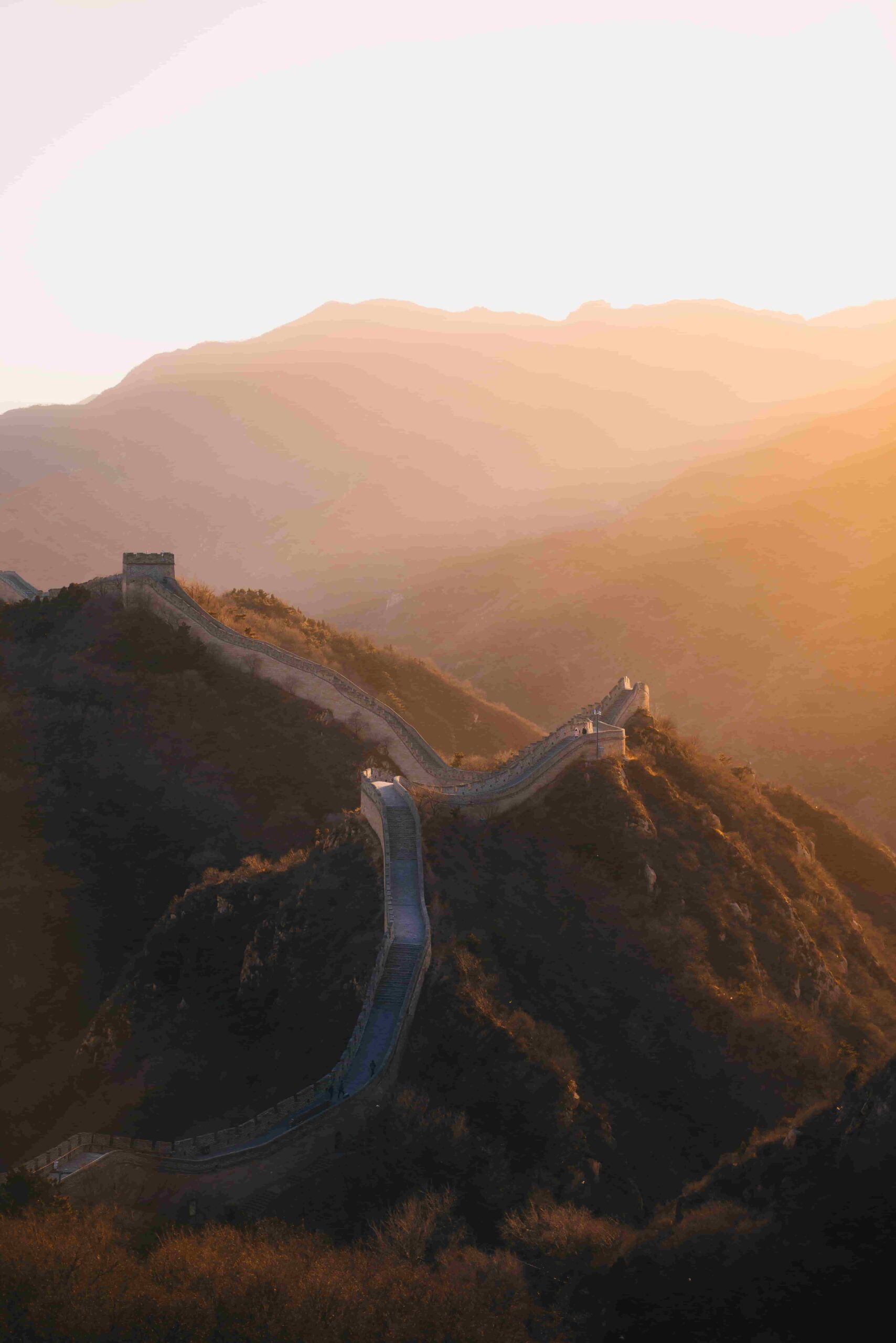
You have seen the Great Wall of China in photos many times. You have heard people talk about it. You think you know what the Great Wall of China is like. And then you stand on the wall. And you feel the wind blowing in your face. You are standing on stones, and the wall is surrounded by mountains in every direction. And then you realize that you did not know anything about the wall.
Let us be honest about the Great Wall of China right away.
It is not just a normal wall. The wall is not one thing that you can experience. The Great Wall of China is a long, old system of walls that stretches for 21,000 kilometers across the northern part of China. The wall was rebuilt many times over more than 2,000 years by many different groups of people who ruled China.
The Great Wall of China goes through deserts and mountains and river valleys. And every part of the wall looks very different from each other. Some parts of the wall are fixed up, look nice, and have many tourists visiting them. Some parts of the Great Wall of China are old and breaking down.
They are covered in weeds and there is nobody visiting them. Some parts of the Great Wall of China have cars that can take you up the mountains, and they have shops where you can buy things to remember your visit. Other parts of the Great Wall of China have nothing. “Just you, the old stones of the Great Wall of China, the mountains and the wind.”
Which part of the wall of China you visit will determine what the Great Wall of China is like for you.
This guide will tell you everything about the Great Wall. Every part of the Great Wall of China, how much it costs to visit each part of the wall, and every other important detail, so that when you finally stand on the old stones of the Great Wall of China, you will be in the exact place you want to be.
A Wall 2,000 Years in the Making
But before we start diving into the logistics, a quick history lesson, as the Great Wall without history is just a very large fence.
Construction of the Great Wall began during the Qin dynasty around 221 B.C. Emperor Qin Shi Huang – the very same man who created the Terracotta Army – decided to join and extend various northern walls into one massive, defensive system, protecting against nomadic intrusions from the north. It was an excruciating and grueling project; hundreds of thousands of laborers (soldiers, peasants, criminals, all lumped together) toiled on the wall, many of whom never saw the light of day again. Their bodies were supposedly packed into the wall itself and thus, it gained its gruesome moniker of ‘the longest cemetery in the world’.
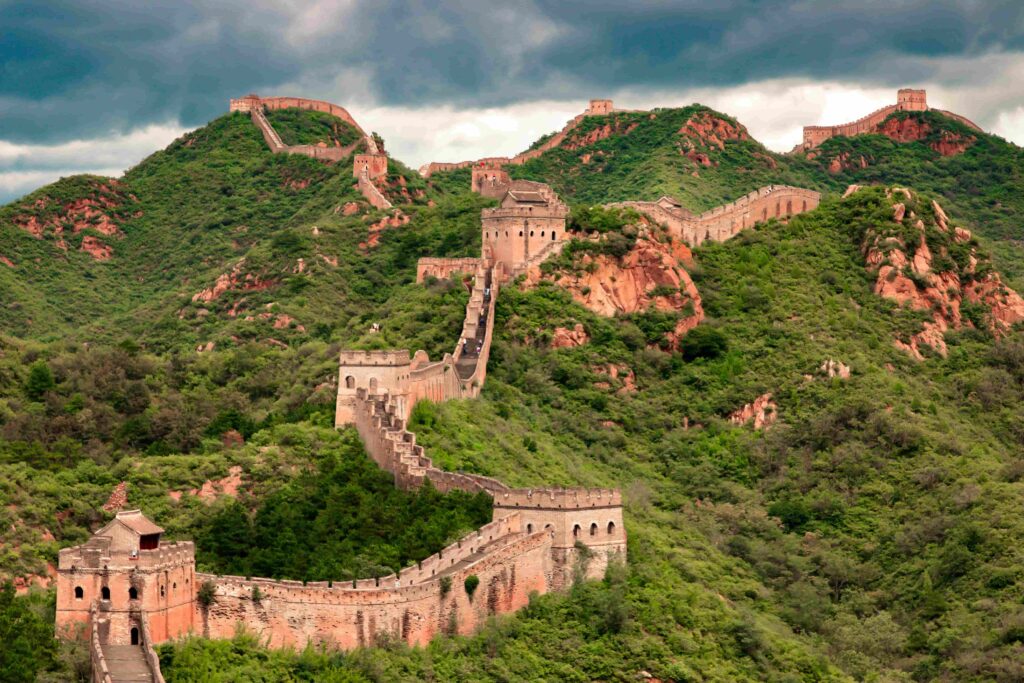
The original Qin wall was made primarily from packed earth and wood, and unfortunately, did not stand the test of time. The wall that most of us picture today is actually from the Ming dynasty (1368–1644), when they took it upon themselves to rebuild and re-extend the wall to a grand scale, out of stone and brick. This is the famous gray-stone Great Wall we have all seen in photographs with battlements, evenly spaced square watchtowers, and steep, winding stairs up mountain ridges.
It is now a UNESCO World Heritage site and one of the most visited sites on earth, but what a lot of people don’t realize is how much of it is untouched, undeveloped and largely abandoned, just “a few hours’ drive away” from Beijing.
The 5 Major Sections You Need to Know
- 🏯 Badaling — The Most Famous Section
Distance from Beijing is around 70 km (about 1.5 hours)
Best for: First-time visitors, families, those who want a traditional experience. Badaling is the Great Wall you see in every postcard, film and travel brochure. It is the section that US presidents visit, that many Chinese school kids tour on field trips, and that appears on Chinese tourism posters. For good reason. It is really spectacular, well-preserved and easy to get to. Depending on when you go, it can also be very crowded. On days during summer and Chinese holidays, Badaling can feel less like an amazing ancient wonder and more like a very scenic and crowded place. People move slowly through the areas at the watchtowers. The experience can be really overwhelming. Reaching Badaling on a weekday morning before 8 AM is different. The mist is in the mountain valleys. The wall stretches ahead of you through the peaks almost empty. The only sounds are the wind and birds singing. This is the Badaling worth experiencing. It is a Great Wall experience.
Ticket: ¥40 (~$6 USD)
Cable car: ¥120 round trip
Opening hours: 6:30 AM – 7:00 PM (summer); 7:00 AM – 6:00 PM (winter)
Tip: Book tickets before you go. You can no longer buy tickets at the gate. - 🌿 Mutianyu — The Best All-Round Section
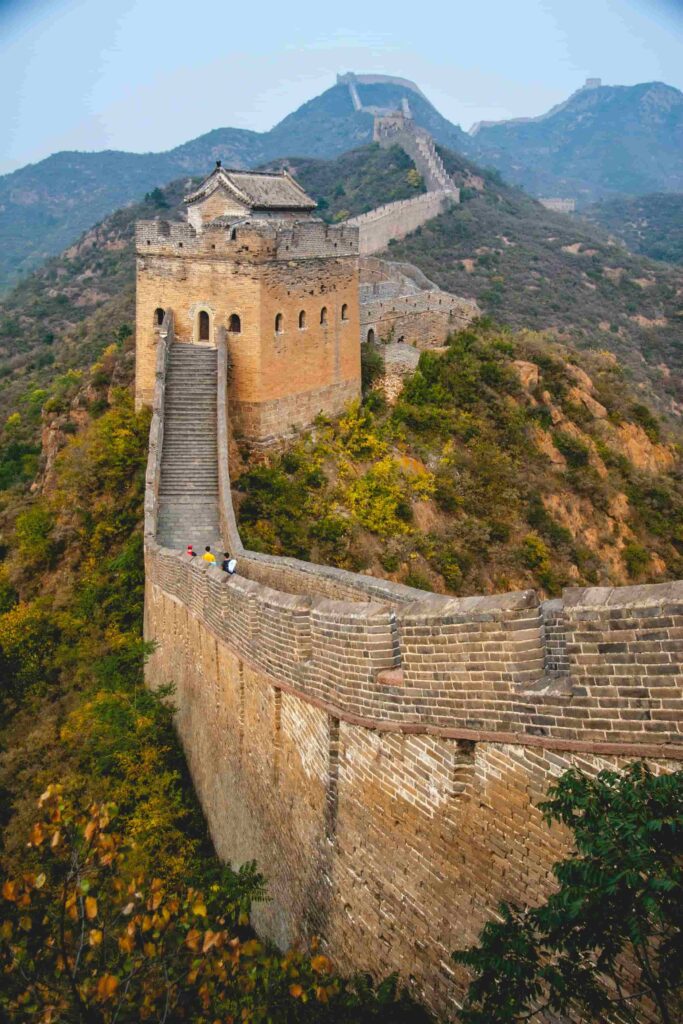
If Badaling is the most famous, Mutianyu is the most beloved — at least among experienced travelers who have done their research. The wall here is beautifully restored, the mountain scenery is dramatic, and the crowds are noticeably thinner than Badaling even on busy days. What makes Mutianyu special is its sheer visual drama. The wall here climbs steeply up forested ridges, twisting through mountains with watchtowers appearing at almost every peak. In autumn, the surrounding forest turns gold and red, and the images you capture here look almost unreal. There is also a toboggan ride down the mountain. Yes, really. A metal slide that takes you from the wall down to the valley floor at speed. It sounds gimmicky. It is, in fact, absolutely brilliant and everyone — regardless of age — is grinning by the bottom. Ticket: ¥45 (~$6 USD)
Cable car: ¥120 round trip
Toboggan: ¥80 one way
Opening hours: 7:30 AM – 6:00 PM
Tip: Arrive before 9 AM for the best experience and morning light photography. - 📸 Jinshanling — The Photographer’s Dream
Distance from Beijing to this place is around 130 km (approx. 2.5 hours).
Recommended for: Hikers, photographers, authentic travelers.
For serious travelers willing to go the extra mile, Jinshanling is further away from Beijing and so harder to reach and far more peaceful than both Badaling and Mutianyu, yet arguably more beautiful. It is the perfect place to go for a more realistic understanding of this massive stone serpent. The wall here is an engaging blend of preserved, crumbling sections, winding across dramatic ridgelines and featuring 67 watchtowers spaced along 10 km. Hiking its length in a day is perfectly possible, moving from well-reconstructed battlements into collapsed, soft sections that bleed into the mountain, with flowers bursting out from between the stones. Witnessing a sunrise on Jinshanling is a journey that people even recall for years after: mist fills the valleys, light gradually captures the watchtowers—the wall exists in dreams here, ancient, immense and mostly your own.
Tickets: ¥65 (Apr.-Oct.), ¥55 (Nov-Mar.)
Opening hours: 8:00 AM – 5:00 PM
Tip: Overnight in Jinshanling village so you can arrive for sunrise — rooms can be found for as little as ¥150/night.
- 🌙 Simatai — The Only Section Open at Night
Distance from Beijing: 150 km (about 2.5–3 hours)
Best for: Night experience, romantic visits, luxury travelers. Simatai is special because it is the only part of the Great Wall open at night. From 17:30 to 21:00, the wall lights up and it looks amazing on the lake below. It’s a genuinely unique night experience. Afterward, the nearby Gubei Water Town — a riverside town styled after old Chinese architecture — makes for a perfect follow-up: wander candlelit streets, grab local food, and watch lanterns drift across the water. It’s the kind of evening that feels cinematic without trying to be. Simatai is also good to visit during the day. The scenery is steep and dramatic. This part of the wall is not as fixed up as some parts, like Badaling or Mutianyu. It feels more real.
Daytime ticket: ¥40 (~$6 USD). Night ticket: ¥75 (~$10 USD).
You need to buy a ticket. Note: If you visit at night, you have to take the cable car both up and down. Tip: Book your tickets, especially on weekends. Lots of people want to visit at night. - 🥾 Jiankou — For the Wild Wall Adventurers
The distance from Beijing to Jiankou is around 90 km (about 2 hours). Jiankou is not for every person. The wall here is not fixed completely. Steep, falling apart, with lots of plants growing. No rails, no lifts, no shops and no people. Some parts are really dangerous. You need hiking shoes, to be fit, and a guide from around here. For people who are ready, Jiankou gives the Great Wall in its simplest form: an old stone structure slowly being covered by the mountain with views that go far in every direction. The “Sky Stairs” part, where the wall goes up a ridge, is one of the most photographed parts of the wall. No entrance fee – it is a wild part with no ticket office. We really think you should get a guide: it costs 200–400 yuan for the day. Be careful: Do not try Jiankou by yourself or in bad weather.
Getting There From Beijing
- By Public Transport — Badaling:
You can take the S2 train from Beijing Huangtudian Station. The train will take you directly to Badaling Station. The journey will take one hour. It will cost you around ¥6. The trains start running in the morning, but you should check the schedule because there are not many services. - By Public Transport — Mutianyu:
take Subway Line 2 to Dongzhimen, then Bus 916 Express to Huairou, followed by Bus H23 or a shared minibus to Mutianyu itself. The whole journey will take two hours. It will cost you around ¥30–40. - You can also take a tour bus. There are tourist buses that leave from hotels and transport hubs in Beijing. The prices are different depending on the company. If the ticket includes getting into the place you are going, this way is easy. You do not have a lot of choices.
If you want to take a car or taxi, it is the easiest way. A trip to Mutianyu and back in a car will cost about ¥400–600. Many hotels can arrange this for you. You can also use Didi, which is like Uber in China, for most of the trip.
Best Time to Visit
🌸 Spring (March–May) — Highly Recommended. Cool temperatures, clear skies, and green forests make spring the ideal season. Crowds are manageable outside of the May Golden Week holiday (avoid the first week of May entirely).
🍂 Autumn (September–November) — Best Overall. Arguably the most beautiful season. The forests around Mutianyu and Jinshanling turn spectacular shades of red and gold. October daytime temperatures are perfect for hiking. Avoid the first week of October (National Golden Week) — crowds rival summer at their worst.
☀️ Summer (June–August) — Not Recommended. Hot, humid, and extremely crowded. If summer is your only option, go early — be at the wall entrance before 7 AM — and leave by noon.
❄️ Winter (December–February) — Underrated. Cold but genuinely magical. Snow-covered battlements, almost no tourists, crisp clear skies. Dress in serious layers. Some sections may close after heavy snowfall — check before visiting.
Where to Stay
In Beijing:
Beijing has everything to offer from 5-star hotels to budget-friendly hotels. The Dongcheng and Chaoyang districts are central and well-connected. For visiting the Great Wall, mostly public transport or taxi availability matters more than location within the city.
Near the Wall:
If you want to stay near the wall, then you can stay at Jinshanling or Simatai. Staying nearby makes a huge difference.
Jinshanling: Small guesthouses in the village — you can stay here, prices from ¥150–300/night. Basic but authentic.
Simatai/Gubei Water Town: Wide range of options from budget inns to five-star hotels. The luxury Commune by the Great Wall (near Badaling) is one of China’s most architecturally impressive stays — rooms start around ¥2,000/night, but the experience is extraordinary.
Final Thoughts
Here is what nobody tells you before you visit the Great Wall for the first time.
The size of it will not make sense until you are standing on it.
You can look at satellite images. You can read that it stretches 21,000 kilometers. You can watch documentaries and study maps. None of it prepares you for the moment you climb to a watchtower, look left, and watch the wall disappear into mountain after mountain after mountain, rolling on forever, until it vanishes over the horizon.
It was built by human hands. Human hands carrying stones up mountain ridges, laying brick in winter, in summer, generation after generation, for over two thousand years. Standing on it, you feel the weight of that time — not oppressively, but with a kind of profound humility. You are standing on something that existed before your country existed. Before most countries existed. Something built at a scale and over a timespan that the human mind struggles to process.
Visit any section. Badaling if you want the iconic experience. Mutianyu if you want beauty with manageable crowds. Jinshanling if you want to earn your view. Simatai if you want to see it glow in the night.
But visit it. Stand on those ancient stones. Look out across those mountains. Let the wind hit you in the face.
The Great Wall does not care about your schedule, your camera, or your social media captions. It has been standing for two thousand years. It will outlast us all.
All it asks is that you show up.
If you have enjoyed the wonder of the Great Wall of China, then it means you can also enjoy the Dubai wonder, Palm Jumeirah.



This is such a detailed guide! I am planning to visit China next year and this article answered all my questions about the best sections to visit. Seems like the perfect choice. Thank you!