Some places are just impossible to capture in a photograph, and before going I’d braced myself for Jiuzhaigou Valley to be yet another ‘over-hyped Instagrammer place, the type of place that actually looks better on the internet than it does when you’re standing in the flesh of it. I was wrong. Hopelessly and embarrassingly wrong.
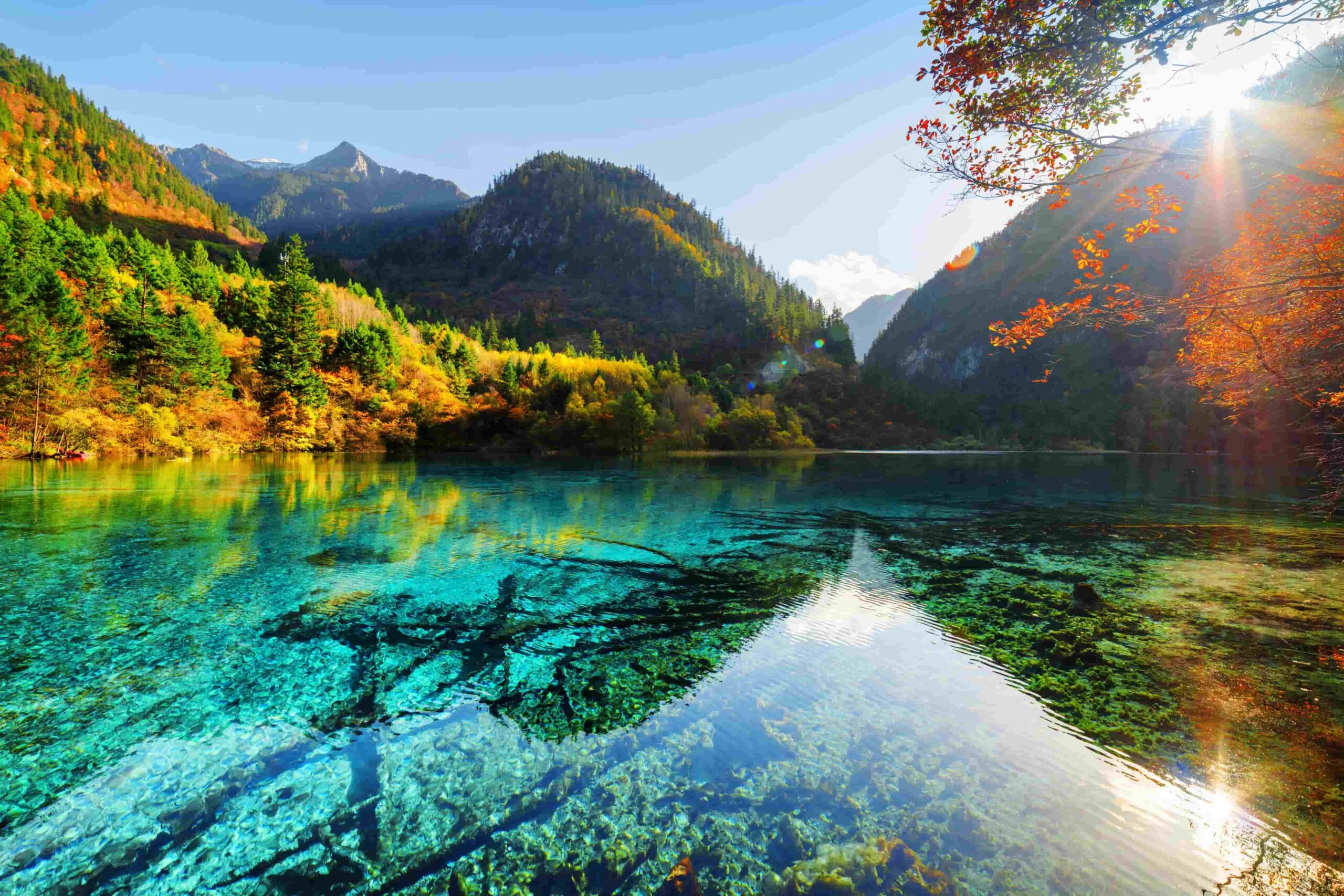
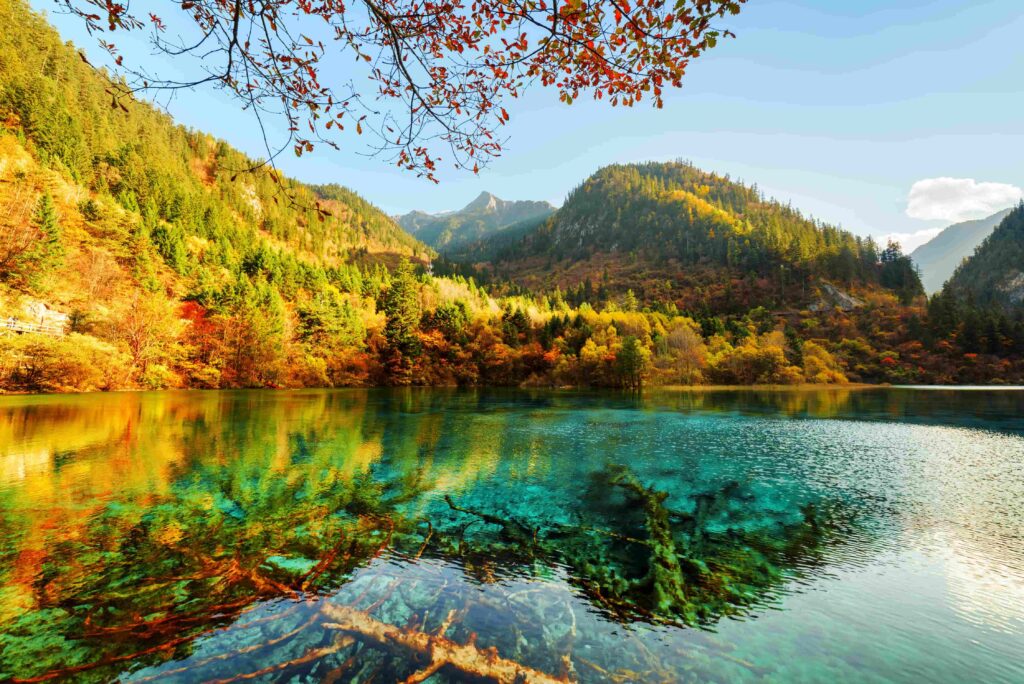
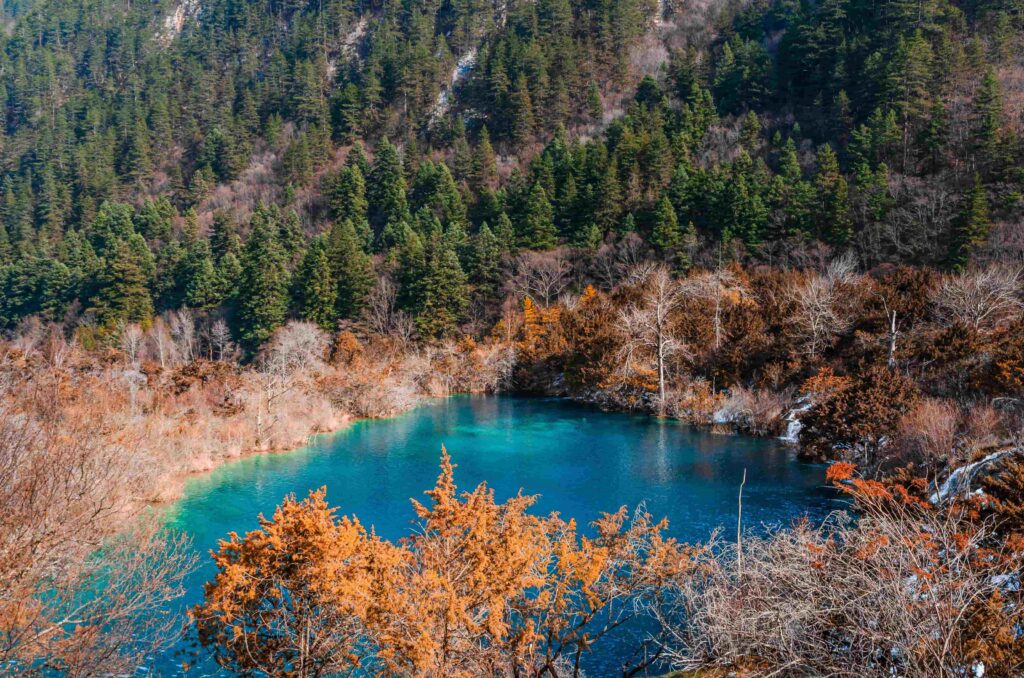
Standing on the shores of Five Flower Lake, watching the light explode into slivers of jade, turquoise and gold across water that was so crystalline I could see ancient, downed trees resting on the bed as though they were an exhibit, I finally grasped what the locals mean when they say it’s a ‘fairyland on Earth’.
Set in the northern Sichuan mountains in the remote Aba Tibetan and Qiang Autonomous Prefecture, some 400-450km north of Chengdu, this isolated high-altitude destination requires a bit of travel savvy to get to, but no place in China more fully repays the endeavor.
What Exactly Is Jiuzhaigou?
First off, the name gives a lot of the game away. ‘Jiuzhai’ means ‘nine villages’, and the Jiuzhaigou Valley is so named because of the nine Tibetan villages situated around it, the inhabitants of most of which still adhere to Tibetan Buddhism to this day. You’ll pass through the former and current homes and may notice prayer flags slung between the branches of trees, traditional wooden houses and miniature shrines that look as though they predate the very notion of a tourist trail by millennia.
The Jiuzhaigou Valley is roughly in the shape of a large ‘Y’ (reversed) comprised of three main arms: Shuzheng, Rize and Zechawa valleys, all told stretching over 50 kilometers in length. In and amongst this, there are over a hundred lakes (you’ll see 108 mentioned time and again, and to be frank nobody’s actually in there counting) as well as waterfalls, snow-topped peaks and forests so dense and ancient they’re in places bordering on prehistoric.
Awarded by UNESCO World Natural Heritage site status back in 1992, it’s quite simple to see why. What’s not readily apparent about the 100-plus lakes of Jiuzhai is the reason why they are so impossibly blue and green – that phenomenon is caused by centuries of deposition of calcium carbonate onto fallen branches, trees, rocks and lakebed sediments. This has in fact led to the local authorities adopting incredibly strict policies with regard to touching the water (and why it is largely forbidden). Your mere finger grease can contaminate the process.
Oh, it is also worth mentioning that there was a large earthquake in 2017, damaging some areas of the park. However, after years of careful ecological restoration, it has since re-opened and its facilities, like the pathways, have only improved along with the protective measures in place.
Getting There: Chengdu Is Your Launchpad
Most trips to Jiuzhaigou begin in Chengdu. The good news is that getting there has become a lot simpler. In the past, this meant an eight-hour bus ride winding through the mountains — exciting for the first hour or two, numbing by the fourth.
Nowadays, taking the high-speed rail to Jiuzhaigou is a good option. Since the railway line from Chengdu to Xining was extended to Huanglongjiuzhai Station in 2024, the trip to Jiuzhaigou that used to take most of the day takes around two to two and a half hours by train. From Huanglongjiuzhai Station, you will need to take a shuttle bus or a private transfer for another one and a half to two hours to get to the Jiuzhaigou area. Grab a window seat if you can — the route cuts through mountain valleys and high plateaus that feel like a preview of what’s waiting for you.
There’s also Jiuzhai Huanglong Airport, followed by a roughly ninety-minute road transfer to the park. Either way, you should plan to spend the day traveling to Jiuzhaigou and do not make any other plans for the same day.
One thing worth knowing: ride-sharing apps like DiDi don’t work well here, so sort out your transfers before you arrive, not after.
Tickets, Timing, and the Real-Name System
Here’s something a lot of visitors struggle with the first time around – make sure to read carefully! Jiuzhaigou Valley implements a real-name ticketing system where your passport will be linked to your ticket, scanned at the gate. So you must bring the physical passport used to make your purchase. You cannot use a picture or photocopy.
There are no longer ticket windows at the park entrance. All tickets must be purchased in advance online. I recommend at least one day in advance, although for weekend visits in the busy autumn season and Chinese public holidays, you can find that tickets sell out up to three days in advance due to a visitor limit (about 41,000 in high season, and less in low season). For foreigners, the easiest option will likely be through one of the online booking platforms, like Trip.com, because the interface is generally in English (as opposed to the official WeChat mini-program).
Tickets cost around 190 yuan, plus about 90 yuan for the unavoidable eco-sightseeing bus (and trust me, you’ll want that as the park is way too big to cover by foot alone). You can often find discount prices for children, teens, and the elderly, and children under 6 or elderly over 65 get in free (but the bus fee still usually applies).
You can only enter the park between approximately 7:30 am and 2:00 pm, and the park itself closes around 6:00 pm, so no impromptu late afternoon strolls. If you like to sleep in on vacation, this is probably the only place on the planet that you should try to break this habit for. Getting in early ensures the best light for photography, fewer crowds, and your best shot at catching those lakes with still, reflective surfaces before any wind kicks up.
One final thing to know: Jiuzhaigou Valley does not offer two-day passes. So, if you wish to visit over two days, you will have to exit the park each day and purchase a new ticket for day two (keep this in mind for your budget if you’re not doing it in one mad rush).
How to Actually Explore the Valley
Once you’re inside, the park’s electric shuttle buses become your best friend — hop on and off as many times as you like throughout the day, at any of the stops along the three valleys. Given how spread out Jiuzhaigou is, trying to cover it on foot alone would eat up your entire trip, so don’t fight the system, just use it.
Most seasoned visitors (myself included) start the day in Rize Valley, home to some of the park’s most photographed spots — Arrow Bamboo Lake, Panda Lake, Five Flower Lake, and Pearl Shoal Waterfall. If that last one looks oddly familiar, it’s probably because you’ve seen it before: it was used as a filming location for Journey to the West.
Around midday, break for lunch at Nuorilang Tourist Center, which sits conveniently at the junction of all three valleys and serves food from 10:30 am to 2 pm — think Lanzhou beef noodles and Sichuan dumplings. Packing your own snacks works too if you’d rather save the yuan for something else.
After lunch, head into Zechawa Valley for Long Lake, the highest lake in the park at 3,100 meters, followed by Five-Color Pond, where the water genuinely shifts between blue, green, and emerald depending on how the light hits it — no filter required. From there, loop back past Nuorilang Waterfall, the widest calcium-formation waterfall in China, before finishing the day through Shuzheng Valley on your way to the exit, passing Rhinoceros Lake, Tiger Lake, and Shuzheng Waterfall along the way.
One practical note: the stretch of trail between Long Lake and Five-Color Pond involves a fair number of stairs, so if you or anyone in your group has knee trouble, take it slow. It’s worth it either way.
Best Time to Visit
The answer is hands down fall (mid-Sept to Oct), when the colors in the surrounding forest explode and get mirrored directly in the water, producing those surreal, over-the-top-almost-photoshopped scenes everyone photographs. Of course, this means this is also the busiest and most expensive time of year. Buy tickets and book accommodations well ahead. Spring – Apr to Jun is great because the waterfalls regain their power, and the water level starts increasing. You’ll also see fewer crowds and much lower hotel prices.
Summer is lush and green, but it also brings more rain and higher humidity.
Winter, from mid-November to March, transforms the park into another universe of frozen waterfalls and ice sculptures on tree branches. This time of year also attracts far fewer visitors. If you are up for the cold, this is probably the most underrated time to visit Jiuzhaigou Valley.
A Few Practical Tips Before You Go
Since no hotels can be built within the scenic spot, book a hotel at Zhangzha Town or Goukou (near the entrance) and start to get into the scenic spot in the morning every day. Regardless of the season, you should bring thick clothes, because it will be warm in the day and cold in the morning and evening at the altitude of this place. You can’t leave without comfortable shoes because you’ll walk a lot.
And don’t skip the sunscreen, even on a cloudy day.
The use of foreign cards locally isn’t always so smooth, so it’s recommended to prepare an Alipay or WeChat Pay, or bring some money with you. If you want to combine this trip with Huanglong Scenic Spot, which is located about two hours away from here (another UNESCO World Heritage Site characterized by alpine views and stepped pools at a higher elevation), elderly tourists who are susceptible to altitude sickness may want to carry a spare portable oxygen canister, in case the first one runs out.
Final Thoughts
Jiuzhaigou Valley isn’t one of those places that you just drift into – it requires some planning, and an early morning call to secure the precious booking, and the usual dose of patience dealing with the Chinese booking systems. But looking out over the still, otherworldly waters of Five Flower Lake as the light bounced and played around them? I’d gladly do that, again and again.
If Sichuan even crosses your mind, do not dismiss Jiuzhaigou.
Put it right there at the top of your list. After visiting Jiuzhaigou Valley, you need to go to Zhangjiajie National Forest Park, China.