There are cities that share their stories with people who visit them through museums and big monuments. George Town is different. The old part of Penang tells its story on the walls of buildings in alleys, on old doors, and on the fronts of old shops that are falling apart. George Town tells its story with wire sculptures of people and with paintings that are so nice you have to stop and look at them. You will also want to take a picture of these paintings. If you are traveling around Southeast Asia and you do not walk around George Town to see the street art, you will miss something special.
This guide from GlanceAsia will help you see all the street art in George Town. It will tell you the story behind the art, show you which paintings you have to see, and give you tips for walking around the city. The guide will also tell you everything you need to know to have a great time in George Town.
Why George Town? The Story Behind the Street Art
George Town is a special place. It is a city that is alive and it’s full of history. The city got an important award in July 2008. It became a UNESCO World Heritage Site. This means that George Town is recognised as a mixture of special culture, which is made up of Malay, Chinese, Indian and British influences that have been shaping the city for a very long time.
To make people aware of this status and to make the city look even more special, the Penang State Government had a competition in 2009. This competition was called “Marking George Town”. The best idea came from a studio in Kuala Lumpur called Sculpture At Work. They suggested putting up some iron wire art installations around George Town. These installations show what everyday life is like in George Town and they also show the trades and traditions of the people who live in George Town.
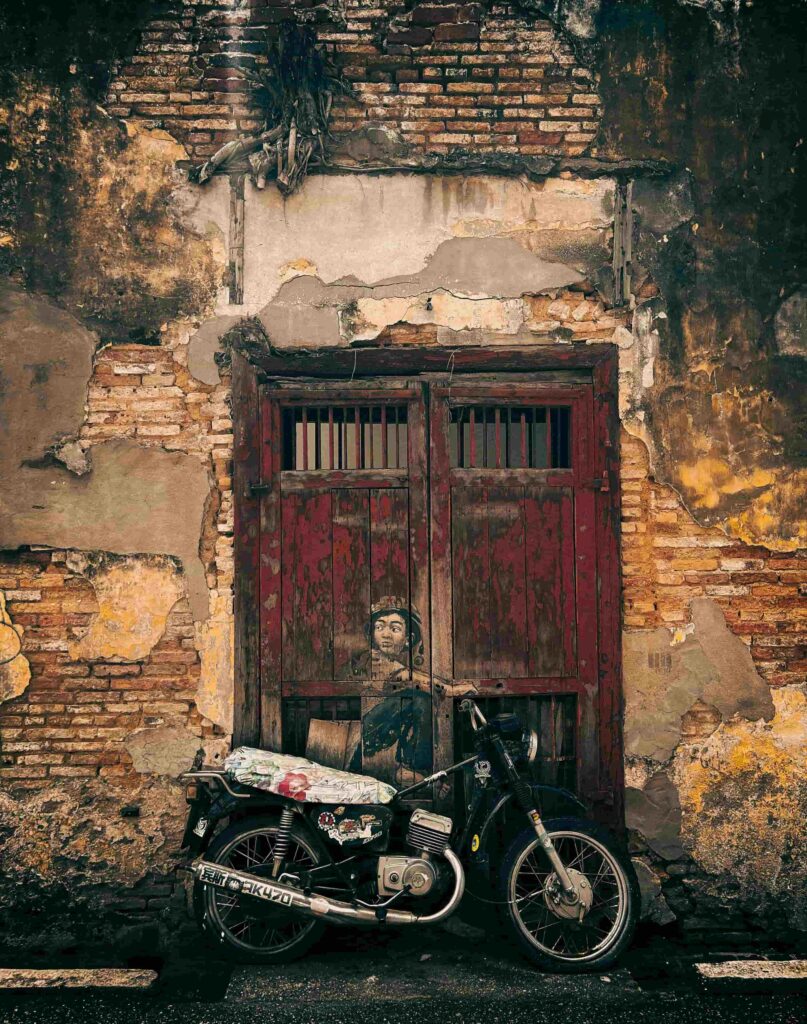
Then in 2012, the George Town Festival brought in Lithuanian artist Ernest Zacharevic. His colorful, hyper-realistic wall art amused and then captured the attention of George Town and the whole internet. Real-life objects like a bicycle, a swing, a chair, etc., were painted into paintings and encouraged passersby to interact with them. George Town became the Street Art Capital of Asia and attracted visitors from all over the world to explore the streets.
Today the street art is now more than Zacharevic’s creations; local and foreign artists keep adding their work to it. This leads to an endless outdoor exhibition in the streets.
The Two Types of Street Art You’ll Find
Before you put on your walking shoes, it is a good idea to know what you are looking for. The street art in George Town can be divided into two types:
- Wall Murals: These are the colorful paintings people know George Town for. Some are playful, like kids on bicycles or a boy on a chair, while others carry deeper messages about Penang’s culture and identity. Styles vary too — some look almost photographic, others more like sketches — and many are designed with photo-ops in mind, perfect for sharing online.
- Iron Wire Installations: These are often overlooked by people who are visiting for the first time. There are over 50 Iron Wire Installations made of steel rods all over George Town and each tells a small story about the history of George Town, like a barber cutting hair, a woman making baskets out of rattan, or a man pulling a rickshaw.
The Installations look striking when they are lit up at night so taking a walk in the evening is just as nice as taking a walk during the day.
The Must-See Murals on Your Heritage Walk
- Kids on a Bicycle. Armenian Street (Lebuh Armenian)
This street art in Penang is one of the most famous. You can see why. It was one of the most important things to see on the trail. It was created by Ernest Zacharevic in 2012; it features two kids riding a bicycle that’s on the wall. The scene feels happy — the kind that reminds you of being a kid yourself. Armenian Street is where you start exploring street art and this mural is the beginning. - Young Kids on a Swing. Lebuh Armenian
There’s another work by Zacharevic just a short walk away from the bicycle mural. A kid is swinging on a rope attached to a wall that’s falling apart. It shows what being a kid is like, in a touching way. - Reaching Up. Lebuh Cannon
I saw a boy who was stretching his arm up towards a hole in the wall. The Reaching Up mural is subtle in a way that makes you stop and think — and honestly, I think it’s beautiful. If you walk away from the road and into the quieter streets of George Town, you will see this Reaching Up mural and it is worth looking at. - The Three Cultural Girls. shows the three groups of people who live in Penang. These are the Malay people, the Indian people and the Chinese people. I think the mural is one of the most important things to see on the trail. It is celebrating how different people are and that is what makes George Town such a great place to visit.
- Wo Ai Nee (I Love You)
This little mural says Wo Ai Nee, which means I Love You in Chinese. People think it is like a love letter to Penang and the people who live there. It’s small, but it carries a lot of feeling. - Local Traders Mural. Chan Kai Lun
Chan Kai Lun painted a big mural of two local traders. The Local Traders Mural shows them clearly even though they are between big air-conditioning units and lots of electricity cables. The Mural is an example of how the street art in George Town fits perfectly with the city around it.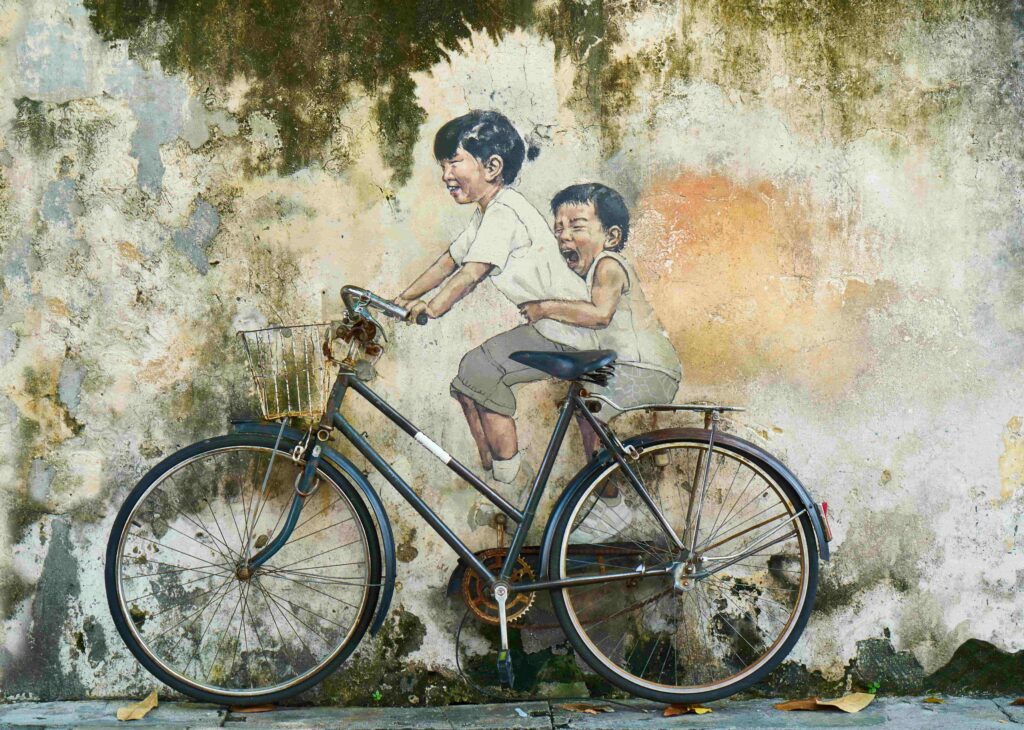
Highlights of the Heritage Walk Beyond the Murals
The street art in George Town is genuinely worth the trip. It is one part of what makes George Town so interesting. When you walk around, you will see some of the amazing streets in all of Southeast Asia.
- Clan Jetties. If you take a walk from where most of the street art is, you will find the Clan Jetties. These are villages built on wooden stilts over the water. Chinese families who came to Penang a long time ago in the 19th century built them. Each jetty is like a community and they are all named after different families like the Chew family, the Tan family, the Lee family and the Lim family. There are also Clan Jetties for people from different backgrounds and they are all part of it. The Chew Jetty is the biggest one and a lot of people visit it. It has a cool mural at the end, which makes the old wooden walkways look even nicer. This is called living history, because people still live in the Jetties today.
- Armenian Street, also known as Lebuh Armenian, is located in the centre of the street art scene in George Town. There are a lot of murals here. That is not all. The street is also lined with beautiful old shops, cute little cafes, antique stores and the amazing Sri Mahamariamman Temple. You should take your time when you are here because there are some alleys off the main street that have murals that are not as well known. George Town’s street art is worth slowing down for. Armenian Street is a big part of that.
- Muntri Street and Chulia Street have their own energy. These two streets have a lot of murals and installations. They are next to each other. Chulia Street is also a place to stay if you are on a budget. There are lots of guesthouses and street food stalls. You can feel the energy of all the backpackers. Muntri Street and Chulia Street have a mix of art, food, and local people, which makes them fun to wander through.
- The Blue Mansion. officially the Cheong Fatt Tze Mansion — is an old Chinese house that’s exactly as blue as the name suggests. It was built generations ago by a wealthy businessman named Cheong Fatt Tze, and it’s still one of the most photographed buildings in George Town. The Blue Mansion is striking up close. It has tiles and windows and carvings. You should go see the Mansion even if you do not take a tour. Just looking at the outside is worth it.
- Penang Town Hall and Fort Cornwallis. To see what the old city was like a long time ago, you can start or end your walk at the Esplanade. This is where you will find Fort Cornwallis, which is the place where the British people first came to Penang in 1786. The Penang Town Hall sits nearby too — a solid, well-preserved colonial building in its own right. What makes George Town interesting to look at is the colonial buildings like Fort Cornwallis and the Penang Town Hall and the streets which have people from many different cultures. The old and the new are mixed together in George Town, which is what makes it so nice to look at.
Practical Tips for the Walk
Best Time to Go
The best time for the visit is either early in the morning before 9 AM or after 4 PM, because the weather is hot and it will make it difficult to enjoy or walk around.
- How Long Does It Take? It’s gonna take up to 3 to 5 hours to explore all the art clusters, clan jetties and key heritage buildings.
- Getting a Map. You can get a map of the street art at most hotels and tourist offices in the UNESCO heritage zone. This map shows you where all the famous murals are, which makes navigating a lot easier. Many people also use Google Maps to save the places they want to see, so they can make their own route.
- Guided vs Self-Guided. You can definitely walk around by yourself. It is a good way to do it because you can stop wherever you like. If you want to know more about the heritage buildings, the history of the clans and the stories behind the art, then it is a good idea to go on a guided heritage walk with someone who knows a lot about Penang. George Town Heritage Walks has different tours, including a Street Art & Clan Jetty walk.
- What to Wear. You should wear clothes that are comfortable and will keep you cool. You will need to walk a lot there, so you must wear comfortable shoes.
- Entrance Fees. The street art walk is free. Some heritage buildings, like the Blue Mansion, charge a small fee if you want to take a guided tour.
A Note on the Art’s Condition
Penang’s weather affects the murals over time. Some have been repainted. So what you see in person might look a bit different from photos. This is part of the art scene’s changing vibe. It’s a reason to visit soon and see the new artworks being added all the time.
Final Thoughts from GlanceAsia
George Town’s street art and heritage walk is more than a tourist trail. It is a journey into the heart of a city. The city has been shaped by people moving in, trading, and mixing cultures over centuries.
By the time you’ve walked past your tenth mural, you start noticing things you’d have missed on a quick pass — a faded shopfront sign, a courtyard through an open door, an old aunty selling kuih from a cart that’s probably been there for decades. That’s what the walk is about.
You can spend half a day or two days walking around its streets and alleys. George Town will leave an impression on you. It is one of Southeast Asia’s special city experiences.
At GlanceAsia, we think the way to know Asia is to walk slowly, be open to new things and be very curious.
We believe that by walking its streets, you can understand the city and its people better.
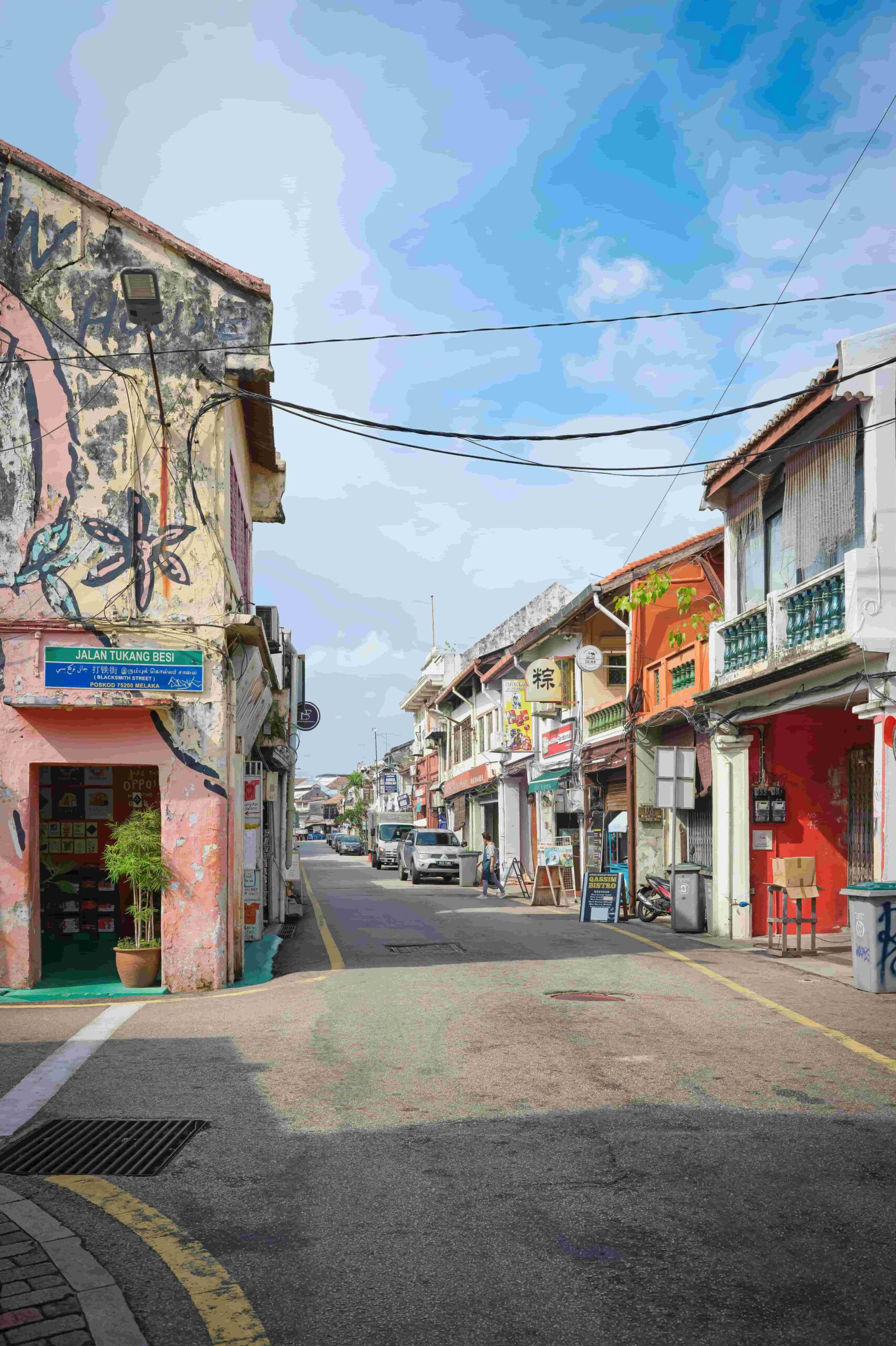
The peeling paint and mismatched shopfronts are part of what makes George Town feel lived-in rather than restored for tourists.
If George Town’s mix of cultures left an impression on you, Dubai’s Global Village offers a similar celebration of diversity — worth adding to your list if Southeast Asia isn’t your only stop this year.