
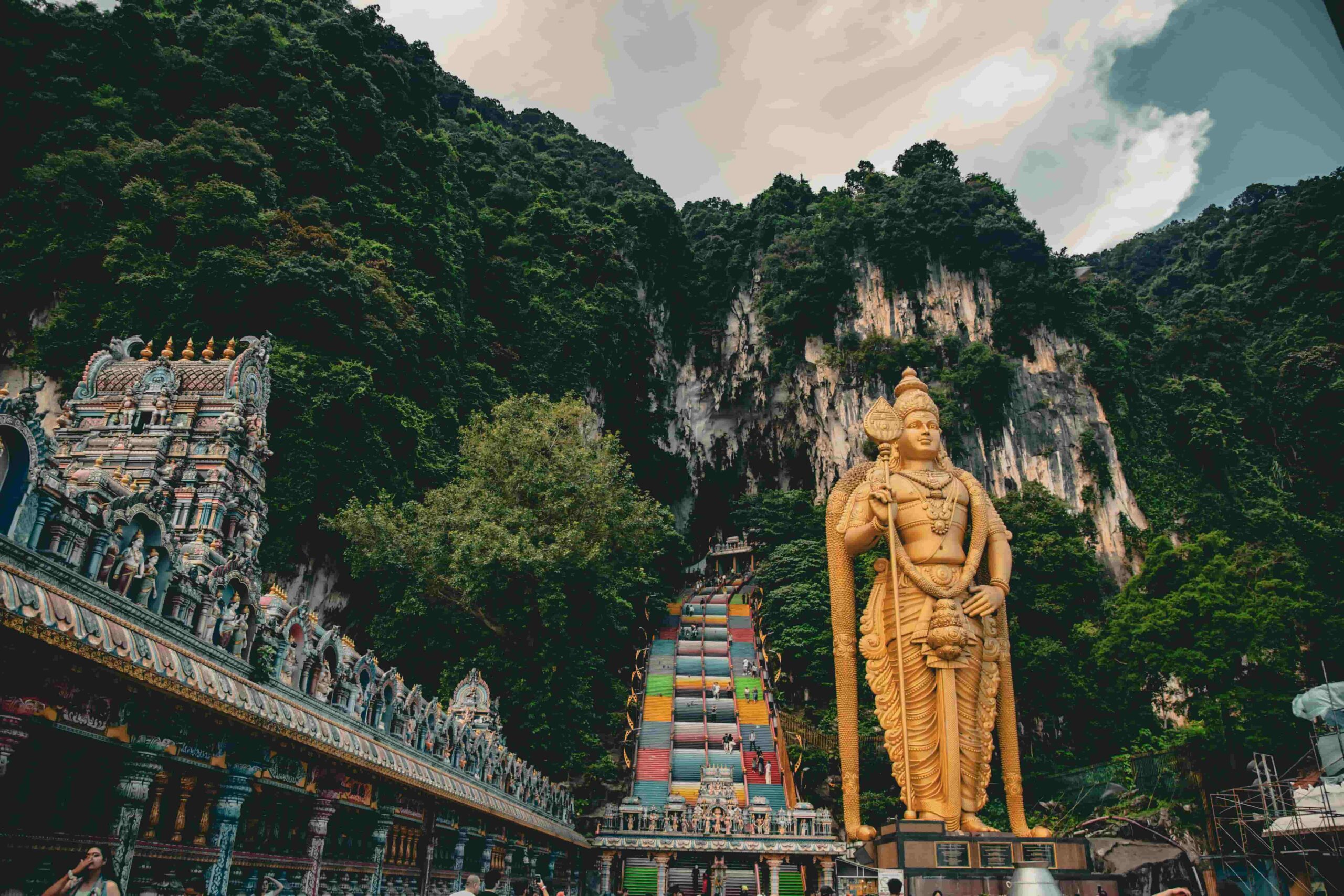
Let me tell you something funny: When I first heard about Batu Caves, I thought of a muddy cave. In other words: just one of these many overrated “touristy” sights which the locals tend to overestimate ridiculously.
Then I visited.
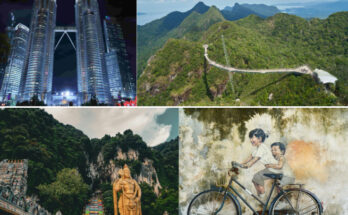
When I turned the corner, looked up and saw the massive 42-meter-tall gold-colored statue of the Hindu god Murugan, in front of the gigantic limestone cliff with the 272 colorful, almost iridescent steps to climb into the mountain, I didn’t hesitate to whip out my phone although I hadn’t even stopped walking yet.
Batu Caves is not only a cave; it is one of the most beautiful, multi-culturally significant and really stimulating places I have ever been to in the whole of Southeast Asia. And the cool thing is it is actually free to enter.
If you go to Kuala Lumpur, there is no other option but Batu Caves. Here is all that you need to know before you set off for there:
What Exactly Are the Batu Caves?
Batu Caves is a limestone hill just 13 kilometers north of central Kuala Lumpur. The Batu hill has several caves inside it which house cave temples, and has become one of the most important Hindu temples outside of India for more than one hundred years.
The caves were discovered, technically at least, by American naturalist William Hornaday in 1878, although the indigenous Temuan had been aware of them long before that. The Hindu trader, K. Thamboosamy Pillai, first came to the caves in the 1890s and was inspired by the shape of the main cave which he said reminded him of the vel – the spear used by Lord Murugan, the main Hindu deity. The first temple was built in the main cave in 1891.
Now Batu Caves is the main and most important Hindu temple in Malaysia and is thronged by well over a million pilgrims and visitors each year when the Hindu festival of Thaipusam is celebrated. Normally held in January or February, this is one of the biggest gatherings of Hindu pilgrims anywhere in the world outside of India. If you are ever in Malaysia and do happen to be there during Thaipusam, then it is definitely worth seeing.
The Giant Golden Statue — Lord Murugan
Before you even think about climbing the stairs, stop and look up at the Batu Caves entrance. You will see a big golden statue of Lord Murugan. He is the Hindu god of war, victory and wisdom. This Lord Murugan statue is the tallest one in the world and it looks amazing when you see it. The construction of the statue took 3 years, and it was finished in 2006.
The statue is made of concrete. It is covered with a lot of gold paint. One thousand five hundred and fifty liters of it. When you stand at the base of the statue and look up, you feel really small. This is a wonderful feeling when you are traveling. Make sure you take your pictures of the Lord Murugan statue before you climb the stairs. The morning light is nice on the statue. There are not many people around early in the day.
The 272 Rainbow Stairs
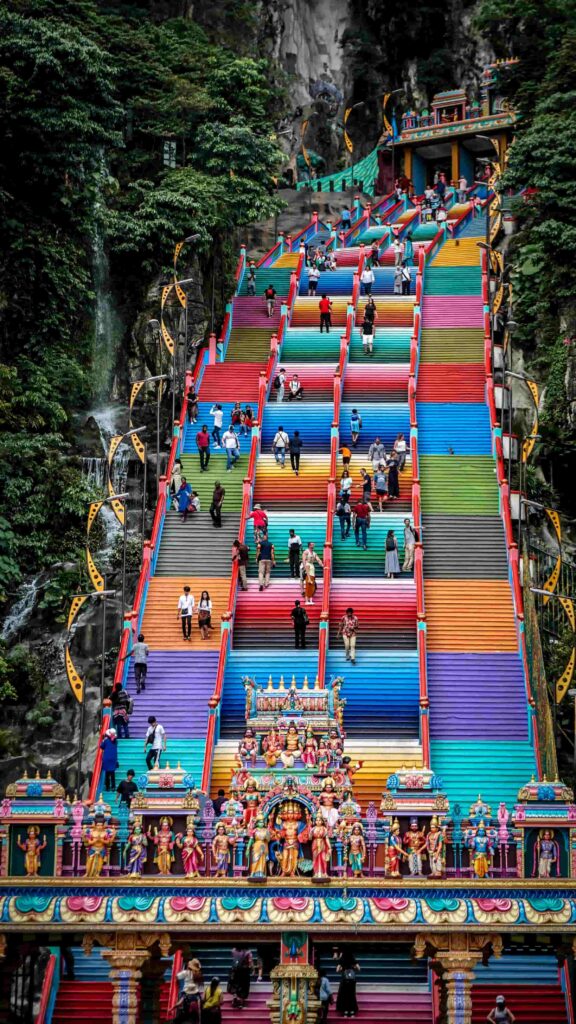
This has to be the most photographed object in Batu Caves and with good reason. The flight of steps going up to the main cave temple was re-painted in 2018 and looks absolutely spectacular, forming a rainbow effect. All 272 steps are painted a different color — red, orange, yellow, green, blue, purple. When photographed from the bottom with the cliff face of limestone ascending behind the steps, the shot is magnificent.
Climbing the stairs will take around 10-15 minutes at normal speed. The final stages of the climb get quite steep near the top but are perfectly manageable even for children and the elderly. The trick is to pace yourself, stop every so often for a breather and look behind you at the view of Kuala Lumpur appearing between the mountains. Now be warned — there are monkeys here, hundreds of them.
The macaques at Batu Caves are infamous and they do not appear at all concerned about people and will attempt to snatch anything that is visible, including cameras, food, drinks, sunglasses, in short anything. Anything that you can leave unattended should be securely put away. Do not feed the monkeys; they may look harmless, but they can scratch and bite severely.
Inside the Main Cave — Cathedral Cave
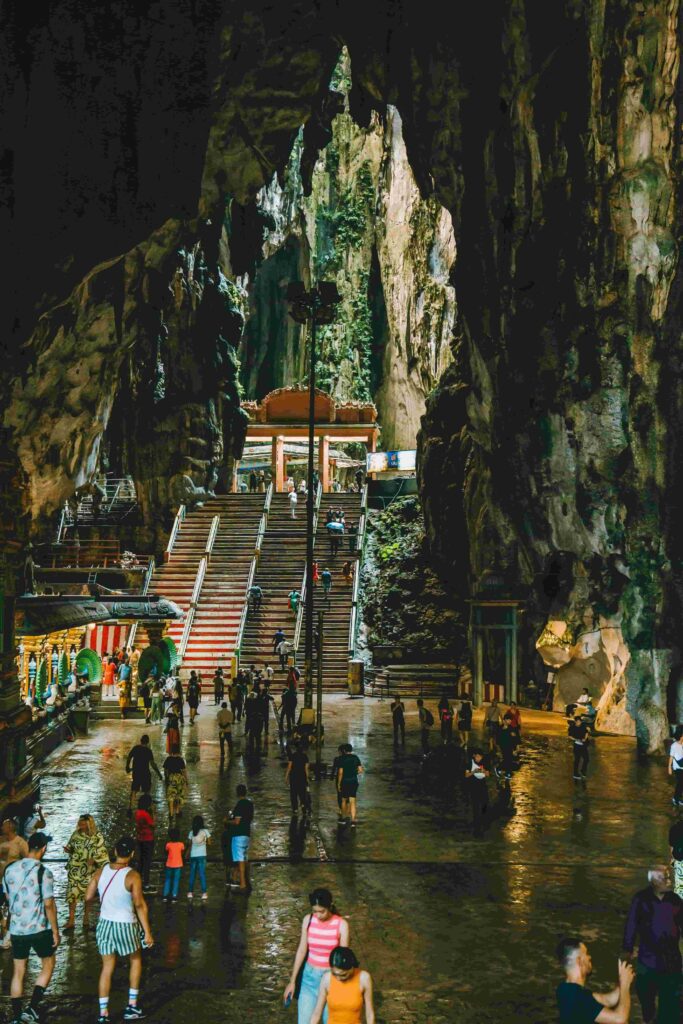
After climbing the stairs and stepping into the central cave for the first time you will be absolutely amazed. The Cathedral Cave (Temple Cave) is huge in comparison to all that you have previously experienced. The cave ceiling reaches up to a massive 100 meters, and where it reaches to the sky the sunlight cascades down in a beam of light onto the temples below creating an Indiana Jones feel to it all.
If you look all around you there are several Hindu temples colored brightly and filled with intricate sculptures of their gods and goddesses. The area gives people a wonderful, almost spiritual feeling. You can smell the burning incense and hear the sound of bells being rung by people from all over the world who visit to worship alongside amazed tourists. It truly is a fascinating, albeit rare, meeting of old religion and the modern tourist boom. I highly recommend you don’t rush through here; really take your time to admire it all and especially take your time and look at the ceiling of the cave.
The Art Gallery Cave and Museum Cave
When people go to Batu Caves they usually only visit the Cathedral Cave. There are other caves at Batu Caves that are really cool to see.
The Art Gallery Cave and the Museum Cave are at the bottom of the hill near where you come in. These caves have nice scenes and statues that show stories from Hindu mythology. They show stories about Lord Murugan, the Ramayana and other important Hindu stories in a way that’s easy to understand and looks really great.
You have to pay a bit of money to get into the Art Gallery Cave and the Museum Cave. It is usually around RM 5. It is worth it. You will learn a lot about Hindu culture. The stories they believe in and the caves themselves are really interesting to look at. The caves are not as crowded as the Cathedral Cave so you can take your time and really look around Batu Caves. You can see all the details of the caves at Batu Caves without a lot of people rushing you.
Getting to Batu Caves — Super Easy
It’s very easy to reach Batu Caves from the center of Kuala Lumpur.
By KTM Train: The easiest and cheapest way to reach the caves is to catch the KTM Komuter train from KL Sentral to the Batu Caves station, located at the base of the hill. The journey is just about 30 minutes and is about RM2-3. When you walk out of the station, you will literally be at the foot of the caves; you won’t be able to miss it.
By Grab: Grab is the Malaysian version of Uber, and they offer the easiest and most reliable way to reach the caves from the center of KL. It will take between 20-30 minutes and depending on the traffic can cost between RM20-35.
By Car: There is ample parking space provided at the base of the caves for around RM 1-2 for the whole day. On weekends, it gets extremely busy and can be overwhelming with traffic so it is advisable to get there as early as possible.
Do not agree to take a taxi to your hotel in KL, from outside your accommodation, without clearly agreeing on a price beforehand – use the Grab or the meter taxi service.
Best Time to Visit
- Best time of day: As soon as the site opens around 6-7am. It’s quiet, the monkeys aren’t too bothersome, and it’s cool. By 10am it’s a totally different kettle of fish – busy, hot and the monkey business is already in full flow.
- Best time of year: Batu Caves is open all year and equally worth visiting at any time of year. If you’re hoping to witness the spectacular, crowded Hindu festival of Thaipusam, plan to visit when hundreds of followers balance enormous, colorful kavadi structures on their heads, shoulders or chests as they climb up the stairs.
- Plan your visit: For January or February – one of Southeast Asia’s most visually stunning events.
- Avoid: The weekend during the middle of the day, roughly 10am to 2pm, when the heat becomes intense, the area becomes impossibly busy, and the climb up the stairs turns into an agonizingly slow snake-like queue with the cave area becoming increasingly packed.
- Weather tip: KL sees its fair share of afternoon downpours – particularly between April and October. Visit the caves during the morning hours and beat the monsoon.
Practical Tips Before You Go
- Entry fee: The main Cathedral cave is totally free to enter. The art gallery and museum caves cost only RM 5 or so to enter.
- Opening times: The entire site is open daily between about 6 AM and 9 PM. The cave temples have slightly different hours, so keep an eye out for signage.
- Photography: Photography is permitted in all areas of the site. Please be discreet if photographing inside the temples, and always ask permission to photograph anyone praying.
- Food and drink: You will find lots of stalls selling food, drinks and souvenirs at the foot of the hill. Make sure to try the fresh coconut water – this is just the thing you will want after walking up the steps on such a hot and humid Malaysian day.
- Things to do nearby: Once you are done at Batu Caves, the Sri Subramaniar Swamy Temple at the foot of the hill is well worth a look. It is painted in such bright and cheerful colors and provides a great opportunity to learn about the Indian culture of Malaysia.
Is It Worth Visiting?
One hundred percent yes.
Batu Caves is a place to visit. It is really visually stunning.
* It is culturally fascinating.
* It is historically important.
* It is physically exciting.
The best part is that it is completely free to enter.
Whether you love history, are into photography, want to learn about cultures or just want to see something remarkable, Batu Caves will not let you down.
I mean even if you just go to see the rainbow stairs and the golden statue and then come down. That alone is worth visiting Batu Caves.
Final Thoughts
The most vibrant, awe-inspiring city, Kuala Lumpur offers so many things to see and do. The Petronas Twin Towers, lively street food, rowdy night markets — there’s always something going on. Batu Caves, though, is in a league of its own.
The meeting of limestone mountains, centuries-old temples, rainbow staircases, and golden idols happens in such a way that makes this place look like it was plucked from an ancient legend.
From the bottom, at the feet of the golden statue, at the foot of the steps to the cliff face, you know instantly that this place has been bringing travelers and pilgrims here for more than a hundred years.
Go early. Bring water. Beware the monkeys.
You’re in for a real shock.
After Batu Caves, don’t forget to visit the Skyscraper of Malaysia. The Twin Towers.
Visited Batu Caves? What was it like? Let us know in the comments! Heading to Kuala Lumpur? Find out how to get up the Petronas Twin Towers and what to do in KL.
— The GlanceAsia Team

Good Work