I’ll be honest — I went to Hunza Valley expecting nice mountains and came back questioning why I’d ever bothered with anywhere else. There’s a particular kind of place that doesn’t just look good in photos but actually changes how you think about scenery, and Hunza is one of those. Tucked into the northern edge of Pakistan, it’s the kind of valley where the mountains and the river seem to be having a quiet conversation with each other, and you’re just lucky enough to be standing in the middle of it.
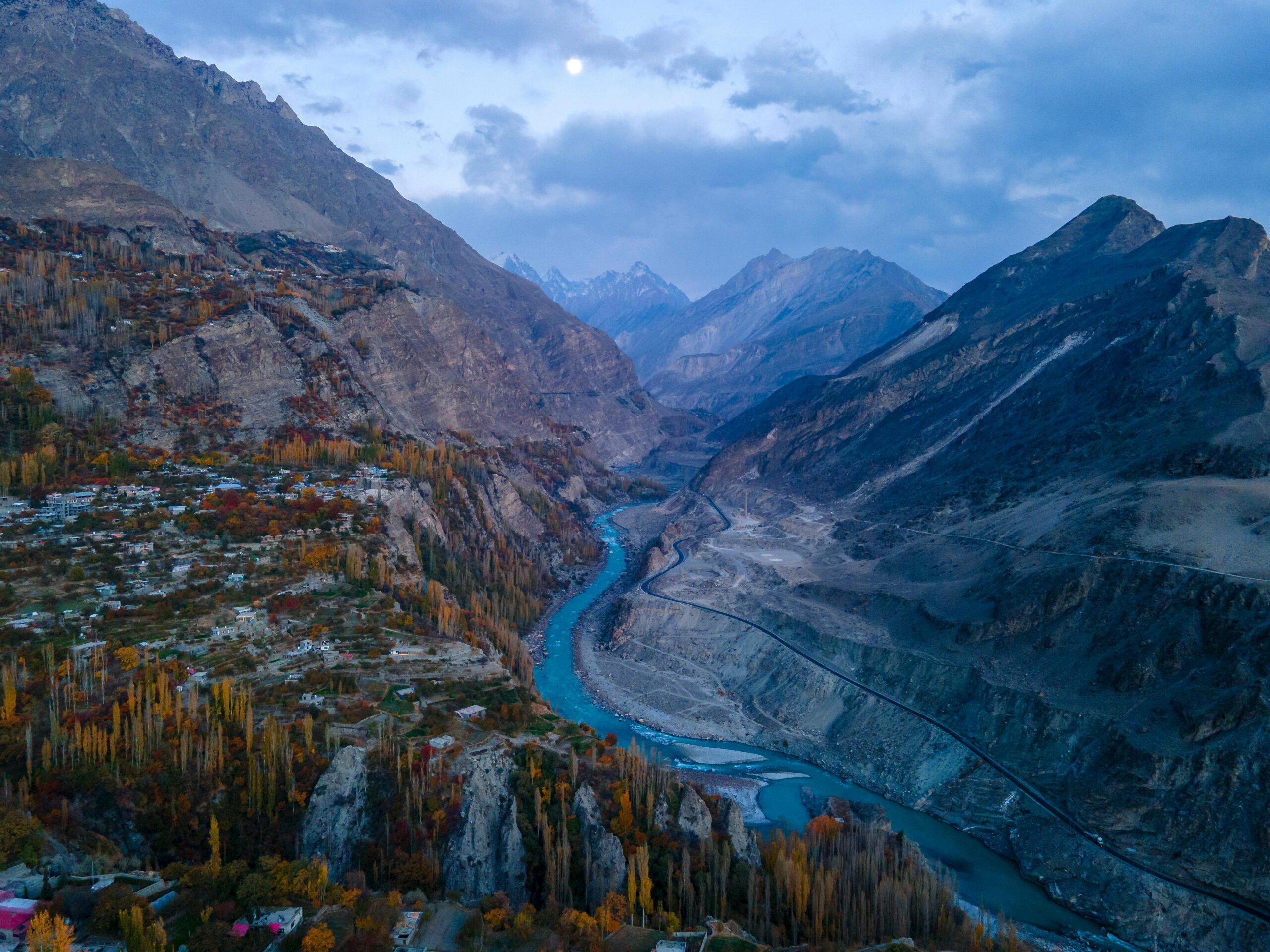
People throw around the word “breathtaking” a lot, usually too easily. But standing at one of the viewpoints above the valley, watching the light change on the Karakoram peaks while the river cuts a blue line through the whole scene below — yeah, it earns the word. This isn’t a place you glance at. It’s a place you stop and just look at for a while, longer than you meant to.
Autumn Is When Hunza valley Shows Off
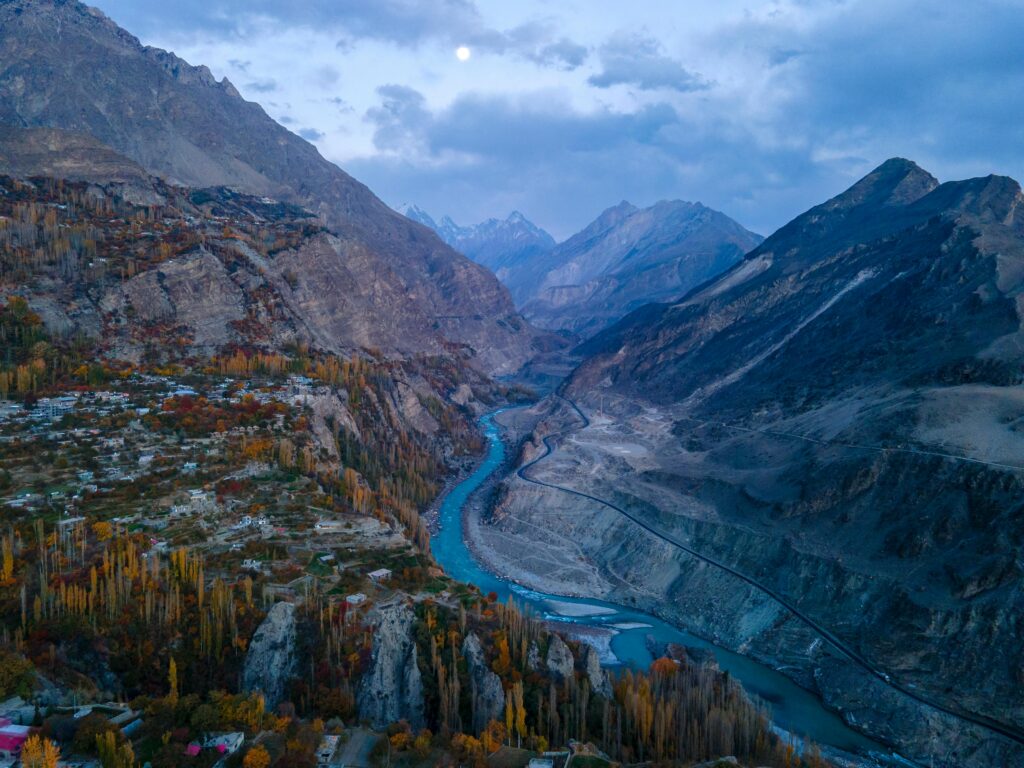
If you can time your trip for October or November, do it. This is when the whole valley seems to catch fire — not literally, obviously, but the poplar and cherry trees turn into this wall of gold, orange, and deep red that just doesn’t look real against the grey and white of the mountains behind them. It’s the kind of contrast that photographers chase for years and sometimes never quite catch. No wonder half the travel photographers and vloggers you follow have a Hunza post sitting somewhere in their feed from around this time of year.
That said — and I think people undersell this — Hunza isn’t a one-season wonder. Spring and summer bring this deep, almost aggressive green to the terraced fields, and winter buries the peaks in snow so the whole valley goes quiet and white. So don’t stress too much if autumn doesn’t line up with your schedule. You’re not missing “the” Hunza. You’re just getting a different one.
The River That Runs Through Everything
You can’t really talk about Hunza valley without talking about the river. The Hunza River is this striking turquoise-blue color, fed by glaciers higher up, and it winds through the valley cutting these deep gorges as it goes. It’s not just scenery, though — it’s basically the reason anything grows here, the reason people settled here in the first place. Watching it from up high, especially where it curves against the reddish-brown mountainside, is one of those moments that makes you reach for your camera and then just… put it down, because you know the photo won’t do it justice.
The People Who Live Here Are Kind of Remarkable
Here’s the thing that surprised me more than the scenery, honestly — the people. The Hunza kuts, as they’re called, have this reputation for living exceptionally long, healthy lives, and once you spend a few days there, you start to see why. Everything is homegrown. Apricots and walnuts show up in nearly every meal, dried apricots especially — you’ll be offered them constantly, and you should say yes every time. The water comes straight down from the glaciers, cold and clean in a way that bottled water just can’t compete with.
But it’s not just the diet. There’s a rhythm to how people live here — unhurried, rooted, generous. Walk through any of the small towns and you’ll get greeted, invited for tea, asked where you’re from, told stories about the valley you didn’t ask for but end up grateful you heard. It’s old-fashioned hospitality in the best sense of that phrase — not performative, just how things are done here.
Baltit and Altit: Two Forts, Two Different Feelings
Hunza’s history lives in its forts, and there are two you shouldn’t skip.
Baltit Fort sits up on a hill overlooking the town, and it’s been there for something like 700 years. Walk up to it and you’ll notice right away the Tibetan influence in the architecture — it doesn’t quite look like anything else you’ll see in Pakistan. Inside, there are these old wooden carvings and household objects that have survived centuries, giving you a strange, quiet sense of the people who actually lived there. And from the top, the view stretches out across the whole valley — mountains on one side, the river cutting through below.
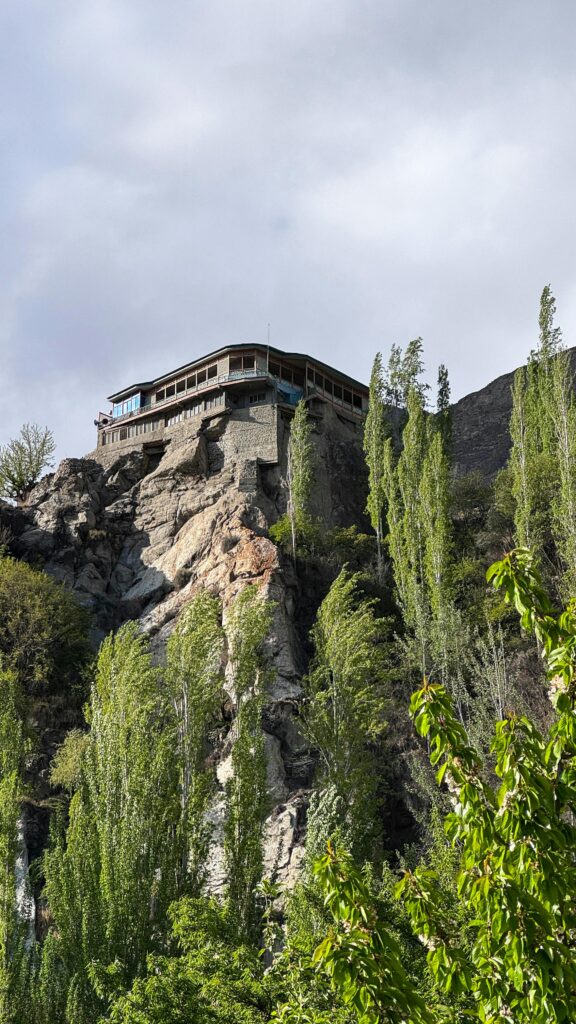
Altit Fort is older still — over 900 years by most accounts, making it the oldest standing structure in the valley. It sits above where the Hunza and Indus Rivers meet, and honestly, the location alone is worth the visit. It’s been restored carefully enough that walking through it feels less like a museum and more like actually stepping into another century. The drop from the fort’s edge down to the river is dramatic enough to make your stomach do something — beautiful, but also a little unsettling if you don’t love heights.
(Quick note: different sources give slightly different ages for both forts, so if you’re writing this up for something official, it’s worth double-checking the exact numbers against a current tourism source.)
Both forts, it turns out, were stops along the old Silk Road — places where traders from wildly different parts of the world crossed paths, traded goods, and probably swapped stories nobody wrote down. Walking through them now, you’re literally retracing the same paths those traders used centuries ago. There’s something oddly moving about that, standing where so much history quietly happened.
What to Actually Do While You’re There
If you’re wondering how to spend your days, here’s roughly how I’d break it down:
- Go deep on the history. Spend a proper half-day at Baltit and Altit — don’t rush either one.
- Chase the big views. Rakaposhi’s peak is unmissable, and Attabad Lake, with its impossibly still, mirror-like water, is worth the detour even if it means an early start.
- Just talk to people. Some of the best moments in Hunza valley aren’t the landmarks — they’re the conversations you have with locals over tea you didn’t plan on drinking.
A Few Practical Things Before You Go
Timing: October and November for the autumn colors, if that’s your priority. Otherwise, honestly, any season works — you’re just choosing which version of Hunza valley you want.
The vibe: Slow. Minimal. Quiet in a way that makes you realize how loud your normal life actually is. If you’re coming to disconnect from your phone and reconnect with, I don’t know, actual reality — this is the place.
Accessibility: Getting there takes some effort — it’s not a quick weekend hop for most people — but that effort is part of why it still feels untouched compared to more accessible tourist spots.
Glanceasia Verdict
| Category | Rating |
|---|---|
| Scenery | ⭐⭐⭐⭐⭐ (5/5) |
| Historical significance | ⭐⭐⭐⭐ (4/5) |
| Best for | Photographers, nature lovers, history enthusiasts |
| Accessibility | ⭐⭐⭐ (3/5) |
| Best season | Autumn (Oct–Nov) for foliage; spring/summer for greenery |
| Ideal duration | 3–4 days |
| Overall | ⭐⭐⭐⭐½ (4.5/5) |
Final Thought
Hunza valley isn’t really a place you “see” and move on from. It gets under your skin a little, and it does it slowly, in ways you don’t fully notice until you’re already back home scrolling through your photos wondering when you can go again. Somewhere between the mountains, the river, the apricots, and the people who’ve figured out how to live slowly and well, you end up leaving with more than photos — you leave with this nagging urge to go back.
There’s also something humbling about the place. You come expecting scenery and leave thinking about pace — about how the Hunzakuts have built an entire way of life around patience, community, and simplicity, things most of us are actively trying to relearn. It’s rare that a travel destination changes how you think about your own life back home, but Hunza valley has a way of doing exactly that, quietly, without trying too hard.
If you’ve never been, put it on the list seriously — not as a “someday” trip, but as one you actually plan for. And if you’ve got any energy left after Hunza valley, don’t stop there.
Continue your northern Pakistan journey:
- Explore the dramatic peaks and glacial lakes of Skardu
- Discover the alpine meadows and valleys of Naran Kaghan